

Can a mold temperature controller for plastic line be used in plastic injection - blow molding?
Aug 26, 2026
Leave a message
Can a mold temperature controller for plastic line be used in plastic injection - blow molding?
As a supplier of mold temperature controllers for plastic lines, I often encounter inquiries regarding the compatibility of our equipment with different plastic processing methods, particularly plastic injection - blow molding. In this blog post, I will delve into the technical aspects to determine whether a mold temperature controller for a plastic line can be effectively used in plastic injection - blow molding.
Understanding Plastic Injection - Blow Molding
Plastic injection - blow molding is a manufacturing process used to produce hollow plastic parts, such as bottles and containers. The process consists of three main stages: injection, blowing, and ejection. In the injection stage, molten plastic is injected into a mold cavity to form a preform. Then, the preform is transferred to a blow mold, where it is inflated with compressed air to take the shape of the final product. Finally, the cooled and solidified part is ejected from the mold.
Temperature control plays a crucial role in each stage of the plastic injection - blow molding process. During the injection stage, maintaining the right mold temperature helps ensure proper filling of the preform mold, reducing the risk of defects such as short shots or weld lines. In the blowing stage, accurate temperature control is essential for achieving uniform wall thickness and preventing the material from collapsing or over - stretching. And during ejection, the mold temperature needs to be sufficiently low to allow the part to retain its shape.
Function and Types of Mold Temperature Controllers for Plastic Lines
Mold temperature controllers for plastic lines are designed to regulate the temperature of the molds used in various plastic processing applications. They work by circulating a heating or cooling medium, such as water or oil, through channels in the mold to either heat or cool it as required.
There are different types of mold temperature controllers available, each with its own characteristics and applications:
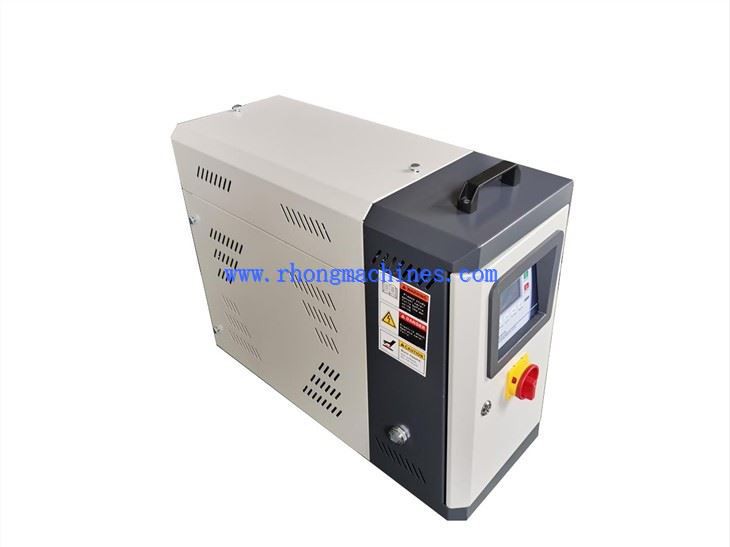

- Water Type Mold Temperature Controller: These controllers use water as the heating and cooling medium. They are suitable for applications where the required temperature range is relatively low, typically up to around 120°C. Water has good heat transfer properties, is cost - effective, and environmentally friendly. You can learn more about water type mold temperature controllers here.
- Oil Type Mold Temperature Controller: Oil - based controllers are used when higher temperatures are needed, usually up to 350°C or more. Oil has a higher boiling point than water, allowing it to operate at elevated temperatures without the risk of vaporization. This makes it ideal for processes that require significant heating. Find more details about oil type mold temperature controllers here.
- Dual Temp Mold Water Heater: This type of controller can maintain two different temperature zones in the mold simultaneously. It offers more precise temperature control, which can be beneficial for complex mold designs or parts with varying temperature requirements. For more information on dual temp mold water heaters, click here.
- Dual - temp Mold Oil Heater: Similar to the dual temp water heater, the dual - temp mold oil heater can control two temperature zones using oil as the medium. It is suitable for high - temperature applications with complex temperature profiles. Check out the dual - temp mold oil heater here.
Compatibility of Plastic Line Mold Temperature Controllers with Plastic Injection - Blow Molding
The answer to whether a mold temperature controller for a plastic line can be used in plastic injection - blow molding is generally yes, but it depends on several factors.
Temperature Requirements:
The first consideration is the temperature range required for the plastic injection - blow molding process. Different plastics have different melting and processing temperatures. For example, polypropylene (PP) typically has a processing temperature range of 180 - 260°C, while polyethylene (PE) has a range of 160 - 220°C. If the process requires a relatively low temperature, a water type mold temperature controller may be sufficient. However, for plastics with higher processing temperatures, an oil type controller is necessary. Our Mold Temperature Controller(Water Type) can be a great option for low - temperature applications, while the oil type controllers are better suited for high - temperature needs.
Mold Design and Complexity:
The complexity of the mold design also affects the choice of temperature controller. In plastic injection - blow molding, some molds may have complex geometries or require different temperature zones to ensure proper forming and cooling of the preform and the final part. In such cases, a dual - temp mold water heater or a dual - temp mold oil heater can provide more precise temperature control. These types of controllers can independently regulate the temperature in different areas of the mold, which is crucial for achieving consistent product quality.
Heat Transfer Requirements:
effective heat transfer is essential for rapid and uniform cooling or heating of the mold. The mold temperature controller should be able to provide sufficient heat transfer capacity to match the requirements of the plastic injection - blow molding process. Factors such as the size of the mold, the flow rate of the heating or cooling medium, and the thermal conductivity of the medium all play a role in determining the heat transfer efficiency. Our mold temperature controllers are designed to optimize heat transfer, ensuring that the mold reaches and maintains the desired temperature quickly and accurately.
Benefits of Using a Suitable Mold Temperature Controller in Plastic Injection - Blow Molding
Using a proper mold temperature controller in plastic injection - blow molding offers several benefits:
- Improved Product Quality: Precise temperature control helps to reduce defects such as warping, shrinkage, and uneven wall thickness. By maintaining the optimal mold temperature, the plastic can flow and solidify more uniformly, resulting in higher - quality products.
- Increased Production Efficiency: With a reliable mold temperature controller, the cycle time of the plastic injection - blow molding process can be reduced. Faster heating and cooling of the mold allow for quicker production of parts, increasing overall productivity.
- Extended Mold Lifespan: Consistent temperature control helps to minimize thermal stress on the mold, reducing the risk of cracking and wear. This can extend the lifespan of the mold, saving on replacement costs.
Conclusion
In conclusion, a mold temperature controller for a plastic line can indeed be used in plastic injection - blow molding, provided that the controller is selected based on the specific temperature requirements, mold design, and heat transfer needs of the process. As a supplier of high - quality mold temperature controllers, we offer a wide range of products to meet the diverse needs of our customers in the plastic injection - blow molding industry.
If you are looking for a reliable mold temperature controller for your plastic injection - blow molding process, we would be more than happy to assist you. Please feel free to contact us to discuss your specific requirements and explore the best solutions for your production. We are committed to providing the highest level of service and support to ensure the success of your plastic processing operations.
References
- "Plastic Injection Molding Handbook" by Dominik Moser and Stefan Schutz
- "Blow Molding Handbook" by James Throne