



Ningbo Beilun Ronghong Machinery Manufacturing Co., Ltd. is located in Ningbo, China, specializing in the manufacture of auxiliary equipment for plastic molding machines. Our products include hopper dryers, vacuum automatic loaders, temperature controllers, industrial chillers and central feeding systems.
Strong Production Ability
We own five production lines, with the factory covering an area of up to 10,000 square meters. There are also one hundred experienced workers in our team. Due to our excellent production setup and dedicated staff, our annual sales exceed 2.5 million US dollars.
Wide Range of Application
Our equipment finds extensive use in a wide variety of industries, such as electronics, household appliances, compact discs, building materials, packaging, beverages, and the medical industry.
Rich Experience
We have a wealth of 35 years of production experience in this field. During these years, we have continuously explored and innovated, and have been able to provide the best equipment and industrial solutions for plastic manufacturing.
Quality Control
We attach great importance to quality control. In the entire production process, from the incoming materials and components to the finished products, every step undergoes strict quality inspections. We ensure that every product that reaches the customer's hands meets the required standards.
What Is Mixing Machinery
Mixing machines, also known as mixer machines, are equipment designed to mix, blend, and otherwise combine two or more materials. Mixing machine is the use of mechanical force and gravity, will be two or more than two kinds of materials evenly mixed up the machine.In the pharmaceutical industry, mixers can mix different ingredients together to form a compound.It can increase the contact surface area of materials to promote chemical reaction.It is also able to accelerate physical changes, such as adding granular solutes to solvents, through the role of the mixer can speed up the dissolution and blending.


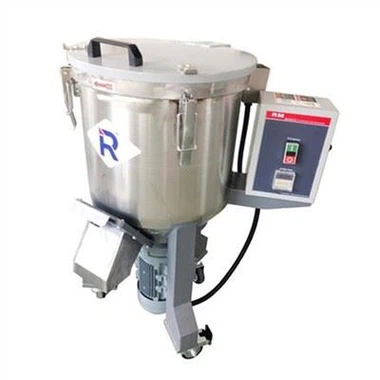

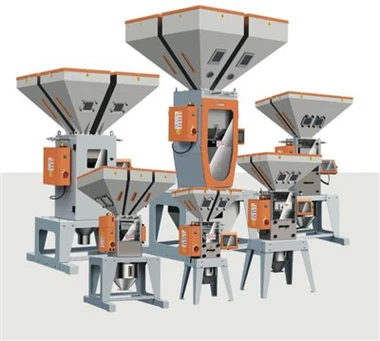


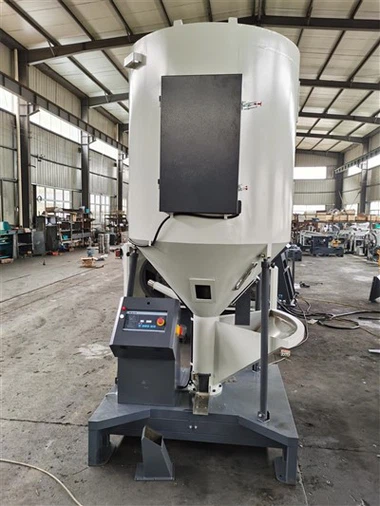

Types of Mixing Machinery
Horizontal Ribbon Mixer
A ribbon mixer—or ribbon blender mixer—uses two intertwined metal strips, similar in shape to a double helix, to move material from one side of the mixer to the other. As the material passes in each direction, it mixes together. Horizontal ribbon mixers are used in a variety of industries, including food processing and chemical processing, and are often used in mixing powders and other solids.
Paddle Mixer
A paddle mixer is similar to a horizontal ribbon mixer, except the mixing action is gentler. As the paddles move the material through the mixer, it creates a cohesive mix. This type of industrial or commercial mixer is often used with thick or viscous semi-solids, like salad dressing or salsa.
Tumbler Mixer
A tumbler mixer rotates and uses gravitational force with rotational force to mix together materials (usually liquids). There are many different types of tumbler mixers, including a v-shaped mixer, double-cone mixer, and slant mixer. A tumbler mixer doesn't require an agitator or impeller, which can be ideal for particularly sensitive liquids.
Emulsifier
An emulsifier is designed to mix substances which are immiscible, or unable to naturally blend. This often includes different types of oils. An emulsifier uses high amounts of pressure to force liquids through small filters and tubes, which breaks down their structure and allows the liquids to mix effectively.
Drum Mixers
Drum mixers are highly versatile. There are many different types and configurations, but drum mixers tend to share the same general design. They are made from large tanks (drums) and they may be used for storage as well as mixing. These are usually used for materials with a low or medium viscosity, like slurries and cement.
Static Mixers
Static mixers are most often used to mix gasses, or liquids and gasses together. The static mixer may use a series of blockages that force the materials together and break down the substances so they mix, similar to an emulsifier.
Planetary Mixer
A planetary mixer uses agitators moving in a circular pattern to mix materials in a bowl or tank. The mixing vessel may be stationary, or it might also rotate to aid the mixing action. The agitator may use paddles, whisks or beaters to blend the materials. This type of commercial food mixer is often used in blending dough and similar foods.
Application of Mixing Machinery
Cosmetics
The cosmetics industry depends on high qualityhigh mixers to ensure the proper production of their highly sensitive products. The use of mixers ensures that cosmetic solutions have the correct consistency and texture. Shearing mixers and multi-shaft mixers provide the speed for emulsification, powder wet out, and particle size reduction.
Batteries and Electronics
There are several uses for mixers in the battery and electronics industry, which include the production of aluminium oxide silicone gels, pastes and slurries, and conductive ink. The selection of a mixing process is built on the idea that each substance is unique and must have a mixer that matches its characteristics, properties, and blending.
Medical Cannabis
Mixers are used in medical cannabis production by blending emulsions and solutions containing hash oil, CBD, THC, and cannabinoids. High speedHigh-speed dispersers are used for cannabinoid extraction while multi-shaft mixers are used for batching products. Throughput ribbon mixers are used for ingredient preparation.
Plastics and Composites
The rapidly growing and ever changingever- plastics and composites industry relyrel on efficient and effective mixing for the production of their products. Polyamides, plastisols, and injection molding formulations are brought together, blended, or mixed during the plastic production process.
Adhesives and Sealants
The adhesive and sealant industry requires the blending and mixing of miscible fluids and the dispersion of high-viscosity dissimilar materials. Mixing is the most critical aspect of adhesive and sealant production which includes the homogenization of adhesive emulsions, the dissolution of polymers into solvents, and the mastication of rubber. Mixing equipment determines efficiency and product quality.
Chemical Industry
As with pharmaceuticals, food, and cosmetics, the chemical industry depends on proper mixing for the success of its products. High to low viscosity mixing is used for dry blending, particle size reduction, emulsification, homogenization, and powder reduction. Materials that are blended or mixed include abrasives for shaping and finishing, coal suspension for the processing of synfuel, flotation reagents, lubricants and oils, and propellants, to name a few.
Maintenance Tips for Mixing Machinery
Regular Inspection and Cleaning
Frequent inspection of your mixer is crucial. Check for any signs of wear, loose components, or damage. Addressing minor issues can prevent more significant problems down the line. After each use, thoroughly clean all components to remove any residual product.
Follow Manufacturer Guidelines
Manufacturers provide detailed manuals and guidelines for the proper operation, cleaning, and maintenance of their mixers. Familiarize yourself with these resources, as they contain valuable information specific to your mixer model.
Disassemble for Deep Cleaning
For a thorough cleaning, disassemble the mixer and clean each component separately. Pay special attention to areas where product buildup can occur, such as in the rotor-stator assembly or on the blades. Use appropriate cleaning agents and tools recommended by.
Use Proper Cleaning Agents
Select cleaning agents that are compatible with the materials used in your mixer. Steer clear of aggressive cleaners or corrosive chemicals that could lead to harm or deterioration. Consult the manufacturer's guidelines for recommended cleaning solutions.
Pay Attention to Seals and Gaskets
Inspect seals and gaskets regularly for signs of wear or damage. These elements are pivotal in upholding a secure seal and averting any potential leaks. Replace any worn or damaged seals promptly to ensure the integrity of your mixer.
Lubricate Moving Parts
Ensuring regular lubrication of components like bearings and gears is paramount for ensuring seamless operation. Adhere to the manufacturer's guidelines regarding the appropriate lubricant type and recommended intervals for application.
Check for Alignment and Balance
Verify that every element is correctly aligned and balanced. Misalignment can lead to excessive wear and reduced performance. If you notice any issues, consult the manufacturer's guidelines for adjusting and aligning the mixer.
Mixing Vessel
Mixing vessel is often called mixing tank (or stirring tank), when mixing equipment used as a reactor, is also known as mixing sensible reactor, sometimes referred to as the reaction sign.The structure type of the gold body is usually a vertical round business shape, its high diameter ratio is mainly based on the operation of the container loading liquid high diameter ratio and the size of the loading coefficient. The bottom shape has a flat bottom, elliptical bottom, conical bottom, etc.
Mixer And Shaft
Also known as an agitator or paddle, the mixer is the core component of the mixing equipment. According to the flow pattern produced by the agitator in the mixing tank, the agitator can be divided into two types: Axial flow and radial flow. For example, propeller impellers, new types of wing impellers, etc. belong to axial flow agitator, while various real leaf and curved leaf turbine impellers belong to radial flow agitator.
Mixing Equipment Baffle
To eliminate the liquid spinning phenomenon in the mixing tank, so that the mixed material can be up and down axial flow, the formation of the whole tank of uniform mixing, usually needs to add several baffle plates in the mixing tank. The number of baffles is generally between 2 and 6, depending on the specific situation. After adding the baffle, the power consumption of mixing will increase obviously and increase with the number of baffles: but after meeting the condition of full baffle, then increasing the number of baffles, the power consumption of mixing will not increase.
Flow Guide Tube
The flow guide tube is a round simple with upper and lower openings, which is placed in the centre of the mixing tank and plays the role of infusion in the mixing. Usually, the upper end of the guide tube is lower than the static liquid level, and there are slots or holes in the tube body. When the liquid level falls in production, the material can still enter through the slot or hole. Usually, the propulsion agitator can be located in the flow guide tube or slightly below the lower end of the flow guide tube; the runner-type or pulp-type agitator is often placed at the lower end of the flow guide tube.
Industrial Mixing Machine Parts


Mixer Blades
All industrial mixers are powered by impellers and mixer blades. Manufacturers provide a variety of blade designs for mixing operations. Propellers, anchors, paddles, and turbines are examples of common blades. The design of a blade should consider viscosity, agitation, and mixing speed. Paddle blades mix viscous materials more effectively than turbine blades, which encourage radial flow.
Vessels for Mixing
Tank or vessel type has a big impact on mixing. Due to the stringent hygiene regulations in the food processing and pharmaceutical industries, these corrosion-resistant vessels can tolerate high temperatures. Due to its strength and ability to withstand corrosion, stainless steel is widely used. maximising fluid dynamics and mixing efficiency by material property matching in vessel size, shape, and form.
Control Panel and Automation
Advanced automation and control panels are seen on a lot of industrial mixers. During mixing, these components control temperature and time. Automation is safer than manual operations since it minimises errors.
Heating and Cooling Systems
Certain industrial mixing procedures call for exact temperature regulation. Temperature control for mixing vessels is aided by external heat exchangers and jacketed vessels. In the chemical and pharmaceutical sectors, temperature control is essential for high-quality manufacturing and raw material preservation. Before making a purchase, you should look into the pricing of the mixing machine.
Seals and Bearings
Industrial mixer life is extended and leaks are avoided by bearings and seals. Fluid leakage in vessels is prevented by lip shaft and mechanical seals. Bearings increase machine efficiency by preventing the shaft from slipping. For long-lasting operation, mixing equipment requires routine maintenance and lubrication.
How to Choose Mixing Machinery
Batch or Continuous
One of the initial concerns that needs to be addressed. In this section, we take a look at some of the factors that should be considered while choosing the appropriate machinery for batch mixing. When combining in batches, each individual batch can be identified and tracked, which assists with maintaining overall quality control. Batch operations are extremely adaptable, and a single blender can be put to use for a variety of purposes, including the blending of multiple substances together.
Batch Size
The appropriate proportions of a combination are task-specific. A small compact mixer is convenient for transport and takes up little room in the workshop or storage shed. When working with a limited amount of concrete, a portable concrete mixer will suffice. Conversely, if you need to mix a lot of concrete at once, a concrete mixture machine provided by mixing machines manufacturers with a large capacity will come in helpful. Larger-capacity mixers typically hold 6 cubic feet of material.
Mixing Capacity
The shorter the mixing time needed to make a homogenous mix, the cheaper the prices will be, and there will be less product deterioration with sensitive materials. This is because a homogenous mix requires a longer mixing time. When doing blending processes, look for ways to maximize productivity while maintaining a soft touch. Manufacturers offer a comprehensive selection of mixers that are suitable for this application.
Power Consumption
In today's world, energy efficiency is a crucial component, and this applies not just to the installed motor power but also to the power that is actually used throughout the blending process. Certain models, like the well-known conical blender, are limited to blending just tiny pieces at a time while the mixing arm spins across the entire mass. They have significantly reduced power requirements. On the other hand, a gas-powered engine eliminates the need for constant access to an electrical outlet. Fuel-powered engines are often more sturdy, long-lasting, and capable of mixing greater quantities of concrete.
Ease of Discharge
One of the most important duties of a batch blender is the discharge, and in this stage, it is essential to make certain that the blender empties in a complete and uniform manner, without leaving any residual 'heel.' Verify the size of the discharge aperture because many blended powder goods have poor flow qualities and can be a little sticky.
Troubleshooting of Mixing Machinery
The first consideration when mixing color concentrate with a base material is setting up the color feeder. The material manufacturer provides let-down ratios to be used when producing color blends. Be sure that the setup matches the manufacturer requirements and that the mixing equipment is clean and in good operational condition.
Poor mixing is often the primary cause of color swirls. Verify that adequate back pressure is being applied to produce the mixing and shear heat needed to achieve a good blend. Also, check that your mixing setup is correct and that the equipment is functioning properly. It's also important to note that a cracked check ring can sometimes cause swirl because of material shear as it passes through the crack.
Although an obvious solution for color that is too dark or too light simply might be adding more or less color to the blend, molecule alignment could also be the culprit. As chains align while the part packs, light can pass through loose alignment easier than if chains are packed tightly together. Temperature adjustments can be made using back pressure or barrel/mold temperatures. Less compactly packed chains let more light through, which makes the part color lighter. Chains that are compressed tighter let less light through, resulting in darker parts.
Our Factory


Frequently Asked Questions
Q: What is mixing equipment used for?
Q: What is the definition of mixing in engineering?
Q: What is the capacity of the mixing machine?
Q: What is the capacity of the mixing machine?
Q: What are the different types of mixer machines?
Q: What equipment is used for mixing?
Q: What is mixing and types of mixing?
Q: What is the mixing machine called?
Q: What is the use of mixing machine?
Q: Why does my mixer keep turning off?
Q: What is the maintenance of a mixer?
Q: Why is my mixer not rotating?
Q: What is the use of a mixing machine?
Q: What are the applications of mixing in industry?
Q: How do I properly maintain and clean my mixing machine?
The bowl and the attachment should be rinsed and then put in the dishwasher. Specialty attachments should be washed separately from regular silverware, per the manufacturer's recommendations. Wash by hand in hot, soapy water if you must.
Make sure your bowl and any additional parts are completely dry before putting them away. In doing so, water stains and mildew can be avoided on the items.
To remove gunk from the crevices between the mixer head's controls, use a dry toothbrush or a specialized kitchen brush. After dust and debris have been swept away, clean the controls off with a moist cloth.
Ningbo Beilun Rhong Machinery Manufacturing Co.,Ltd. is one of the most professional mixing machinery manufacturers and suppliers in China, specialized in providing the best customized service. We warmly welcome you to wholesale high quality mixing machinery made in China here from our factory. For price consultation, contact us.