



Ningbo Beilun Ronghong Machinery Manufacturing Co., Ltd. is located in Ningbo, China, specializing in the manufacture of auxiliary equipment for plastic molding machines. Our products include hopper dryers, vacuum automatic loaders, temperature controllers, industrial chillers and central feeding systems.
Strong Production Ability
We own five production lines, with the factory covering an area of up to 10,000 square meters. There are also one hundred experienced workers in our team. Due to our excellent production setup and dedicated staff, our annual sales exceed 2.5 million US dollars.
Wide Range of Application
Our equipment finds extensive use in a wide variety of industries, such as electronics, household appliances, compact discs, building materials, packaging, beverages, and the medical industry.
Rich Experience
We have a wealth of 35 years of production experience in this field. During these years, we have continuously explored and innovated, and have been able to provide the best equipment and industrial solutions for plastic manufacturing.
Quality Control
We attach great importance to quality control. In the entire production process, from the incoming materials and components to the finished products, every step undergoes strict quality inspections. We ensure that every product that reaches the customer's hands meets the required standards.
What Is Granulating Machinery
The granulator is specially designed for the reduction of both wet and dry materials into a granular product to a specific size distribution. A granulator is a mechanical device used to form a variety of materials into pellets. This process is often used in agriculture to make feed pellets. Also, granulators have found to a very widespread in the field of processing wood into heating pellets. In addition, granulators are used in pharmaceuticals, food industries and other industries. They have already become an integral part of modern production processes.


Features of Granulating Machinery
Optimal Performance
Running a material-specific granulator is equivalent to adopting a tailor-made granulator for your specific application. This custom approach ensures optimal cutting efficiency and performance, making it a valuable asset in recycling your materials effectively.
High Regrind Quality
By adopting a material-specific granulator, plastic processors or recyclers can achieve higher quality of regrinds. When the granulator model selection is made accurately, the chosen granulator should effectively reduce plastic material to a uniform granule size. The typical granule size falls within the range of 8 to 12 mm, varying based on the specific model and screen size utilized.
High Throughput
Material-specific granulators are precisely tailored for particular applications. This type of granulators oensure a high throughput rate, allowing plastic processors to maximize uptime and operational efficiency.
Lower Maintenance Cost
Since material-specific granulators are designed to operate efficiently with specific materials, they are less prone to damage and wear caused by processing incompatible materials. For example, plastic film is thin and soft, this type of flexible material tends to wrap around the rotor and causes a rotor jam.
Energy Efficiency
Material-specific granulators are optimized to consume less energy. Their design focuses on maximizing energy efficiency by matching the processing requirements of specific materials, resulting in reduced energy consumption and lower operating costs over time.
Types of Granulating Machinery
Beside-the-Press Granulators
Beside-the-press granulators, also known as BTP granulators, are designed to work alongside injection molding machines. These granulators are compact and can be easily integrated into the production line, allowing for immediate recycling of plastic waste generated during the injection molding process.
Central Granulators
Central granulators are larger machines designed to handle plastic waste from multiple sources, such as injection molding machines, blow molding machines, and extrusion lines. These granulators are typically located in a central area within the production facility and can process large volumes of plastic waste.
Slow-Speed Granulators
Slow-speed granulators, also known as low-speed granulators, are designed to handle tough and thick-walled plastic waste, such as large injection molded parts, blow-molded containers, and thick sheets. These granulators feature a low-speed, high-torque cutting system that minimizes dust generation and heat buildup during the granulation process.
High-Speed Granulators
High-speed granulators are designed for processing thin-walled, soft, and brittle plastic waste, such as films, fibers, and small injection molded parts. These granulators feature a high-speed cutting system that allows for efficient and rapid granulation of plastic waste.
Screenless Granulators
Screenless granulators, also known as “grinder-less” granulators, are designed to process plastic waste without the use of screens. Instead, these granulators use a cutting system that produces granules of a consistent size, eliminating the need for size classification through screens.
Food Industry And Animal Husbandry
Feed granulators occupy an important place in the agricultural sector, where they are used for the production of balanced feed for agricultural animals and fish. Their use makes it possible to effectively transform grains, legumes, as well as secondary products into pellets that are easier to store and transport, as well as more attractive for animal consumption.
Energy Industry
In the field of solid biofuel production, granulators play a key role. They process wood, straw and other types of biomass into pellets that are used in heating systems. This not only contributes to the disposal of logging and agricultural waste but also ensures the production of ecologically clean fuel that does not contain chemical impurities.
Pharmaceutical Industry
Granulators in the pharmaceutical industry are used to granulate active ingredients to facilitate dosing and tablet production, preparation of tabletting mixtures, dosage control and stability of dosage forms, helping pharmaceutical companies to ensure a quality and effective end product.
Chemical Industry
In the chemical industry, granulators play an important role in the production of various chemical products. They are used for the granulation of raw materials and help in forming the product in the form of granules or pellets. This may include the production of fertilizers, chemical additives, plastics, cosmetics and other chemical products. Granulators help ensure uniformity and consistency of particle size, which facilitates further processing, transportation and application of the product in production.
Production Of Plastics
In the polymer processing industry, granulators are used for the production of plastic granules, which are then used in the formation of various types of plastic products (by casting or extrusion). The production of granules in this area is done by grinding secondary plastic to the state of granules. This allows the reuse of plastic waste, significantly reducing the impact of plastic on the environment.
Components of Granulating Machinery


Cutting Chambers
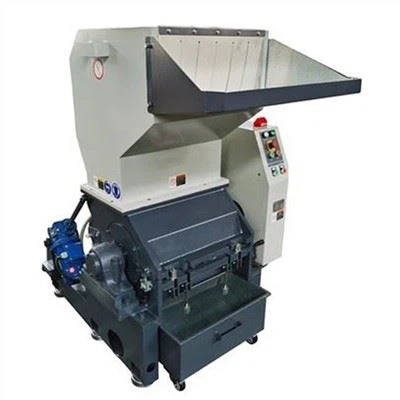
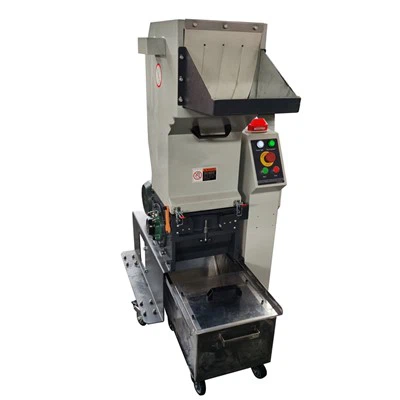
There are three basic cutting-chamber designs: conventional offset, tangential, and straight-drop. The offset directs material at an angle perpendicular to the rotor, which is good for general purpose applications. The popular tangential design positions the rotor at an offset from the feed opening to provide a larger "bite" radius, which is the most efficient way to achieve high throughput and clean regrind with bulky, thin-walled parts. A straight-drop design feeds material from the top of the rotor and is recommended for thick-walled parts. There is also a hybrid model designed to to process both thick- and thin-walled materials in the same machine.
Rotors
Rotors hold the rotating knives that drive material into the cutting zone between the rotating and mating stationary knives mounted granulator bed. The four main types of rotors are open, closed or solid, staggered and combination staggered/segmented. Open rotors are good for granulating heat-sensitive resins or feedstocks that are still warm from processing. Closed or solid rotors provide a much stronger knife mounting arrangement to cut through the thickest feedstocks. Staggered rotors are are excellent for cutting most heavy, thick-walled parts.
Knives
The number of knife blades, their arrangement, tip angle, speed, and sharpness all have an important impact on granulate quality and granulator efficiency. Knives may be mounted on a stationary bed or on the rotor. The clearance between rotating and bed knives is crucial to size reduction performance. There is a wide variety of knife configurations from which to choose, each of which lend themselves best to certain product forms and materials.
Screens
The size of output granulate is controlled by the diameter of the holes in the screen. Screen hole size is heavily dependent on material composition and machine size. When running at slower rotor speeds, smaller screen holes and a thinner screen will produce more uniform particle sizes and highest throughput. At higher speeds, larger screen holes are needed to achieve throughput and reduce fines, although they may increase the range of particle sizes, particularly with brittle materials.
Feed Hoppers & Rools
There are a wide variety of feeding options from which to choose. Selecting the proper feed hopper depends on the the material form being processed. For example, different designs will be appropriate for profile extrusions, film or sheet, bulky parts, robotic sprue pickers, and so on. Feed rolls are used for flat materials such as extruded sheets, films, light thermoformed sheets (plastic cups, packaging materials) or flexible tubing.
Sound, Service & Safety
Apart from the fundamental components of a granulator, there are other aspects of the design that will have important ramifications on the usability of a specific model. Tearing up materials is by nature a noisy process, and the effectiveness of the sound enclosure will matter to the working environment near the granulator. Perhaps more important is how easy and safe a granulator is to service.
Viewing Windows
Optional viewing windows on the hopper offer the opportunity to watch material being processed. This gives you the ability to gauge how full the cutting chamber is and verify consistent material flow without having to shut the machine down.
Maintenance Tips For Granulating Machinery
Maintaining Knife Performance
Regularly sharpening and cleaning the knives is essential to ensure clean cuts and prevent issues like dust, fines, and uneven granulate. Knives should be inspected for wear and replaced when necessary, especially when processing challenging materials or high volumes.
Preventing Screen Problems
The screen plays a critical role in separating the correctly sized granulate from larger pieces. Regularly cleaning and rotating the screen helps prevent build-up and clogging, which can reduce throughput and damage the machine. Worn-out screens should be replaced to ensure consistent granulate quality.
Avoiding Heat Buildup
Neglected maintenance can contribute to increased heat buildup within the cutting chamber. This can lead to reduced efficiency, increased energy consumption, and potential damage to the machine's components. Regular inspections and cleaning can help prevent excessive heat accumulation.
Minimizing Noise
Improperly maintained plastic granulator machines can produce excessive noise, which can be disruptive and indicate underlying issues. Regular maintenance, such as lubricating moving parts and addressing loose components, can help minimize noise levels.
Preventing Major Repairs
By conducting regular inspections and addressing minor issues promptly, operators can prevent minor problems from escalating into major repairs. This proactive approach can save time, money, and production downtime.
How to Choose Granulating Machinery
Type Of Plastic Waste
Different types of plastic waste require different types of granulators. For example, soft plastic waste may require a different type of granulator than hard plastic waste.
01
Throughput Capacity
The throughput capacity of a granulator determines how much plastic waste it can handle per hour. Choose a granulator with a capacity that matches your business needs.
02
Size And Space Requirements
Plastic granulators come in different sizes, and you need to consider the available space in your facility before choosing a granulator.
03
Maintenance And Repair Requirements
Plastic granulators require regular maintenance and occasional repairs. choose a granulator that is easy to maintain and repair.
04
Cost
The cost of a plastic granulator varies depending on the type and capacity. Choose a granulator that fits your budget, but also meets your business needs.
05
How to Install Granulating Machinery
Our machines are connected by assembly. Depending on the type, the specific installation sequence is different. Customers can install it in the order of the machine pictures.
Open the upper cover of the crusher and turn the cutter shaft of the crusher by hand to see if the rotation is smooth and whether the bottom screen is scratched.
Put the machine on a flat level floor, you must ensure the machine is on level or else will affect the machine's performance. Customers should insert a 1.5-meter iron bar into the ground and then use 6 square copper wires to connect the iron bar and the frame grounding bolt if your machine assembles with an electrostatic separator. Then connect all the parts in an electric box and check all parts, and bolts are loosened or not, pls ensure all bolts are fastened tightly.
Turn on the power switches of each device one by one and observe whether the motor rotation is right or not. You can also run it without any materials for half an hour to observe if there are any problems during the operation to ease the adjustment.
After everything are ok, then running the machine, adjust the air bottom fan and air separator system vibration frequency till the machine reaches the best effect and the largest capacity.
Troubleshooting Granulating Machinery
Granulator Not Starting
Check the power supply and electrical connections. Inspect the safety switches and interlocks. Verify that the emergency stop button is not engaged.

Reduced Granule Output
Check for dull or damaged blades and replace if necessary. Inspect the screens for blockages or damage. Verify that the feed rate is appropriate for the machine's capacity.
Inconsistent Granule Size
Check the condition of the blades and screens and replace if worn. Verify that the rotor and stator are properly aligned. Ensure that the feed material is consistent in size and composition
Excessive Noise or Vibration
Check for loose or worn bearings and replace if necessary. Inspect the rotor and stator for damage or imbalance. Verify that the machine is properly leveled and anchored.
Our Factory


Frequently Asked Questions
Q: What is granulation in engineering?
Q: What is Granulation?
Q: Why is there a need for a granulation process?
Q: What is the principle of granulation?
Q: What is the mechanism of granulator machine?
Q: What are the materials used in granulation?
Q: What is the principle of granulator machine?
Q: What types of plastics can be processed by plastic granulators?
Q: Are plastic granulators energy-efficient?
Q: How do I determine the granule size produced by a plastic granulator?
Q: Can plastic granulators handle post-consumer plastic waste?
Q: Are there safety precautions when operating plastic granulator machines?
Q: What are plastic granulator machines?
Q: Can plastic granulators handle mixed plastic waste?
Q: How often do the blades and screens of a plastic granulator need to be replaced?
Q: What are the safety precautions for machines?
Never remove machine safeguards or try to get round them.
Do not use a machine with safeguards that are unauthorised or damaged.
Q: Why do you need a heavy-duty granulator?
Heavy-duty granulators are best suited when you require denser granules with a compact structure. The higher speed and mechanical force produce thicker pieces with better flow characteristics.
Heavy-duty granulation processes can adapt to both continuous and batch granule production processes.
Q: Can plastic granulators handle mixed types of plastics?
Q: How can I ensure the safety of operators when using a plastic granulator machine?
Q: What maintenance does a plastic granulator require?
Ningbo Beilun Rhong Machinery Manufacturing Co.,Ltd. is one of the most professional granulating machinery manufacturers and suppliers in China, specialized in providing the best customized service. We warmly welcome you to wholesale high quality granulating machinery made in China here from our factory. For price consultation, contact us.
Compact Soundproofed Film Granulators