

Can Profile Granulators be used for processing profiles with fibers?
Oct 22, 2026
Leave a message
If you're involved in plastic processing-whether you run a custom extrusion line, a recycling facility, or a thermoforming plant-you've likely encountered the challenge of handling plastic profiles that include fiber reinforcement. Fiber-loaded profiles (think fiberglass-reinforced PVC window frames, carbon fiber-reinforced polypropylene automotive trim, or glass fiber-filled HDPE construction components) are prized for their strength, durability, and dimensional stability, but they pose unique headaches when it comes time to process production scrap or post-industrial waste. A question we get all the time here at our granulating machinery team is: Can Profile Granulators be used for processing profiles with fibers?
This isn't a yes-or-no question, and the answer depends on several key factors: the type of fiber, the fiber loading percentage, the profile's wall thickness, your end goal for the regrind, and the specific design of the granulator you're using. As a supplier that's specialized in industrial granulation equipment for over two decades, we've worked with dozens of manufacturers to develop solutions that balance efficiency, regrind quality, and machine longevity when working with fiber-reinforced plastics. To cut through the confusion, let's break down what makes fiber-loaded profiles tricky, how standard Profile Granulators stack up, and when modifications or complementary equipment might be necessary.
First, let's define what we mean by "fiber-reinforced profiles" and why they're hard to granulate. Most reinforcing fibers used in plastic profiles fall into two categories: glass fibers (the most common, ranging from short 3mm to long 12mm strands) and carbon fibers (lighter, stiffer, and more abrasive). The fiber loading can vary wildly too-some profiles have as little as 10% glass fiber for mild stiffness, while others are packed with 40% or more, designed for high-stakes applications like structural beams or aerospace components. The problem these fibers create when you feed them into a granulator is twofold: they're extremely abrasive, and they can cause the plastic to become brittle and prone to inconsistent cutting.
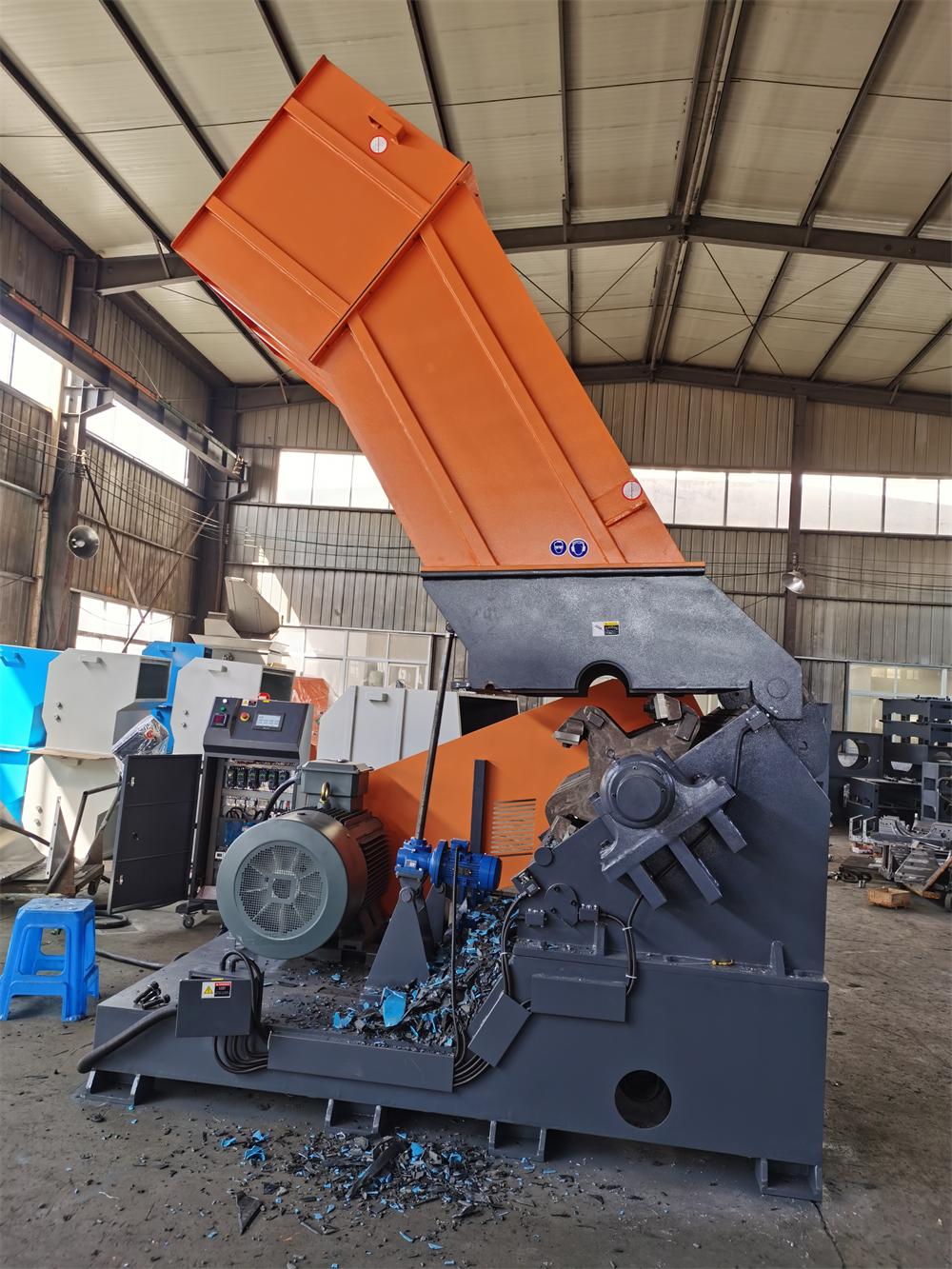
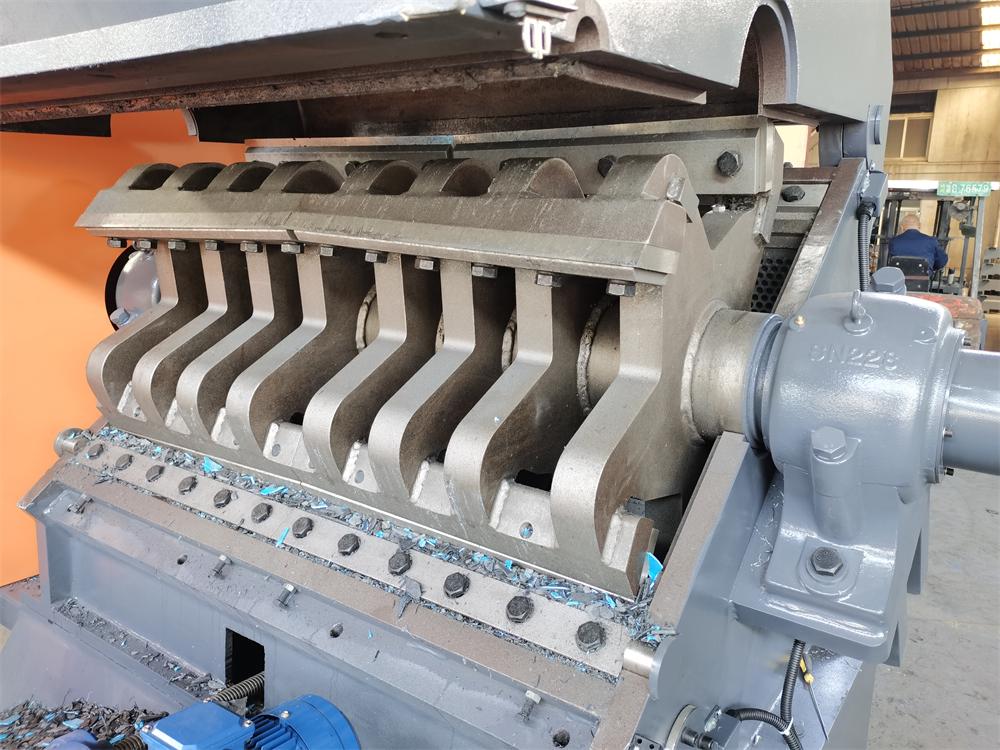
Standard plastic profiles (unreinforced PVC, PE, or PP) are relatively easy to granulate because their material is pliable enough to be sheared cleanly by the granulator's rotating blades. But when you add fibers, that pliability drops. A fiberglass-reinforced PVC window scrap might feel solid and rigid, so instead of being cleanly sliced, it can bend, tear, or even get pulled between the blades and the stator, leading to uneven granule sizes, excess dust, and premature blade wear. The abrasive nature of glass and carbon fibers is another big issue-they act like tiny sandpaper particles, eroding the sharp edges of the granulator blades over time, which not only reduces cutting efficiency but also shortens the lifespan of the entire machine.
So, can a standard Profile Granulator handle this? For low-fiber, easy-to-cut profiles, the answer is often yes-with a few small adjustments. Let's clarify what a Profile Granulator is, for context: these machines are purpose-built to process long, continuous plastic profiles (extrusion offcuts, trimmings, etc.) that are cut to length before granulation, designed to handle large, bulky parts without jamming. Unlike film granulators, which work with thin, flexible material, or thermoforming granulators, which process sheet trimmings and offcuts, Profile Granulators have wider cutting chambers, heavier-duty blades, and more powerful motors to tackle thicker, rigid parts.
In our experience, when a customer comes to us asking if their existing Profile Granulator can handle a 15% glass fiber-filled PP profile, the first thing we check is the blade design and material. Standard blades for Profile Granulators are typically made of carbon steel, which is fine for unreinforced plastic, but when fibers are present, they need a harder, more wear-resistant material-like tool steel or even tungsten carbide-tipped blades. These blades hold their sharp edges much longer when exposed to abrasive fibers, reducing downtime for blade changes and maintenance. We also recommend adjusting the gap between the rotating rotor blades and the stationary stator blades: a slightly wider gap (around 0.5mm, compared to 0.2mm for unreinforced profiles) helps prevent the rigid fiber-loaded material from getting caught between the blades, which causes jams and uneven cutting.
Another key adjustment is the granulator's screen size. Regrind quality is everything when you're recycling plastic profiles, because the regrind is often mixed with virgin resin for new production. For fiber-loaded profiles, we recommend using a slightly larger screen than you would for unreinforced material, or a screen with uniform holes, to ensure consistent granule size. If the screen holes are too small, the rigid fiber-reinforced plastic can't pass through easily, leading to the motor working harder and overheating, which can damage both the granulator and degrade the plastic's properties.
But here's the catch: standard Profile Granulators will struggle with high-fiber loading profiles (30% or more fiber) or profiles made with highly abrasive carbon fibers. In these cases, the abrasive wear on the blades and internal components becomes too severe for even hardened steel blades, and the rigid material is too tough to cut cleanly. That's when you might need to pair your Profile Granulator with additional equipment, or consider a specialized granulator designed for tougher materials.
For example, many of our customers that process high-fiber profiles combine their Profile Granulators with a plastic off-line film granulator? No, wait-film granulators are for thin material, but a better complementary piece is a pre-shredder for extremely rigid, high-fiber profiles. A pre-shredder breaks the bulky profile offcuts into smaller, more manageable chunks before feeding them into the Profile Granulator, reducing stress on the granulator's blades and motor, and improving cutting consistency. We also often recommend our Plastic Drum Granulator Rhong Machinery for smaller volume or specialty applications, as it has a reinforced cutting chamber and heavy-duty blades that can handle even 40% glass fiber profiles with minimal wear.
Another common question we get is about regrind quality when processing fiber-reinforced profiles with a Profile Granulator. Can you reuse the regrind in new profile production? The short answer is yes, but it depends on how the fibers are handled during granulation. If the granulator cuts the fibers cleanly rather than fraying or breaking them unevenly, the regrind will maintain the reinforcing properties of the original material, which is critical for structural profiles. If the blades are dull or the machine is poorly adjusted, the fibers will break into short, uneven lengths, which reduces the strength of the regrind, limiting its use to non-structural applications. That's why proper maintenance and blade material are so important-sharp, hardened blades ensure clean fiber cuts, preserving the regrind's quality.
Let's also look at some real-world examples to make this concrete. A few months ago, we worked with a mid-sized manufacturer that produces fiberglass-reinforced PVC decking profiles. They were using a standard Profile Granulator to process their production scrap, but they were seeing blade wear every 2 weeks, inconsistent granule sizes, and regrind that was too brittle to use in new decking. After talking through their needs, we upgraded their existing Profile Granulator with tungsten carbide-tipped blades, adjusted the blade gap to 0.5mm, and replaced their standard screen with a 6mm uniform hole screen. The results were immediate: blade life extended to 8 weeks, granule size consistency improved by 30%, and they were able to reuse 100% of the regrind in new production, reducing their plastic waste by 25,000 pounds per year.
Another customer, an automotive parts maker that produces carbon fiber-reinforced PP bumper beams, needed to process high-fiber loading scrap. Their initial Profile Granulator couldn't handle the abrasive carbon fibers-blades wore out in less than a week, and the regrind had too many broken fibers. We recommended pairing their Profile Granulator with a pre-shredder to break the bumper scrap into smaller pieces, and upgrading to our specialized heavy-duty Profile Granulator with full tungsten carbide blades and a reinforced rotor. We also advised them to add a dust extraction system to handle the fine carbon fiber dust, which is a safety concern as well as a maintenance issue. With these adjustments, they now process 2,000 pounds of scrap per week, with blade life extended to 12 weeks, and the regrind is used in non-structural automotive trim parts, reducing their overall waste costs.
Now, let's address a common misconception: some people think that fiber-reinforced profiles should only be processed with specialized granulators like Thermoforming Granulators, but that's not accurate. Thermoforming Granulators are designed for thinner sheet material, and while they can handle some rigid profiles, their cutting chambers are smaller and not optimized for long, bulky profile offcuts. Profile Granulators, by design, have longer rotors and wider chambers that can handle the length and volume of profile scrap, making them a better fit for most profile processing applications.
That said, there are cases where a different type of granulator might be a better choice. For example, if you're processing very thin fiber-reinforced profiles (like thin-walled fiberglass tubes) along with thicker structural profiles, you might need a combination. Or if you're processing post-consumer fiber-reinforced plastic waste, which can have variable thickness and fiber content, a more versatile granulator might be better. But for most in-plant profile processing (extrusion line trimmings, production scrap), a properly configured Profile Granulator is the most efficient and cost-effective solution.
The key takeaways here are:
- Low-fiber loading (10-20% glass fiber) standard profiles: A basic Profile Granulator with hardened steel blades will work, with minor adjustments to blade gap and screen size.
- Medium-fiber loading (20-30% glass/carbon fiber) profiles: Upgrade to tungsten carbide-tipped blades, adjust gap and screen, and add pre-shredding if needed.
- High-fiber loading (30%+) or highly abrasive carbon fiber profiles: Pair a heavy-duty Profile Granulator with a pre-shredder, and invest in regular blade maintenance to avoid premature wear.
It's also important to mention that working with fibers introduces additional safety considerations. Fine glass or carbon fiber dust can be a respiratory hazard, so all granulation equipment should have proper dust extraction systems. When we work with customers, we always include recommendations for dust collection and safety protocols to ensure their facility is compliant with occupational health standards.
If you're currently struggling with processing fiber-reinforced profiles, or if you're looking to upgrade your granulation equipment to reduce waste and improve regrind quality, our team can help. We design and manufacture Profile Granulators tailored to specific needs, whether you're processing low-fiber PVC profiles or high-carbon fiber structural parts. We also offer assessments of your current setup to identify adjustments that can improve efficiency and reduce downtime.
Ready to learn more about how a properly configured Profile Granulator can work for your fiber-reinforced profile processing? Reach out to our team today to discuss your specific needs, or explore our range of granulation solutions on our website. We're here to help you find the right equipment for your operation, no matter the challenge.
References
- Plastic Engineering Society. (2021). Handbook of Plastic Recycling and Compounding. Hanser Publishers.
- Granulating Machinery Association. (2022). Best Practices for Processing Fiber-Reinforced Thermoplastics. Industry Technical Report.
- ASTM International. (2020). Standard Guide for Determining Wear Resistance of Plastic Processing Equipment Components. ASTM D6110-20.
- Zhang, L., et al. (2023). "Effect of Granulator Blade Design on Regrind Quality of Fiber-Reinforced PP." Journal of Applied Polymer Science, 140(15), e53672.