

What is the granulation capacity of a Quiet Centralized Granulator per hour?
Oct 19, 2026
Leave a message
If you've ever walked through a plastic manufacturing facility, you've probably noticed a common pain point: loud, disruptive machinery that dominates workspace acoustics, makes communication hard, and even forces workers to wear ear protection for extended shifts. As a supplier of industrial granulation equipment, I get asked all the time: "What is the granulation capacity of a Quiet Centralized Granulator per hour?" It's a fair question-because capacity matters, but so does creating a safe, comfortable work environment that doesn't sacrifice performance. Let's break this down, from the science behind quiet operation to real-world numbers, so you can make an informed choice for your operation.
First, let's clarify what a Quiet Centralized Granulator actually is, for anyone new to the category. Unlike small, standalone granulators that only process scrap from a single machine (like an injection molder or extruder), centralized granulators are designed to feed scrap from multiple production lines into one unit. That means they handle higher volumes, are integrated into a plant's core scrap management system, and are built to run 24/7 in most cases. The "quiet" differentiator comes from specialized engineering: sound-dampening housings, variable-speed rotors that reduce vibration, and optimized blade geometries that cut down on the sharp, grating noise common in standard granulators. For context, many traditional centralized granulators run at 85 decibels or higher-about as loud as a lawnmower-while our Quiet Centralized Granulator clocks in at 72 to 78 decibels, which is roughly the level of a typical conversation. That makes it a game-changer for facilities looking to improve workplace safety and compliance with OSHA noise standards.
Now, the big question: hourly granulation capacity. This isn't a one-size-fits-all number. Capacity depends on several key factors: the type of plastic being processed (its hardness, thickness, and viscosity), the size of the feedstock (whether you're cutting large sprues from injection molding or thin film scrap), the design of the granulator's rotor and blades, and the screen size you use to filter finished granulate. That said, from real-world deployments with our clients across automotive packaging, consumer goods, and medical plastics, the typical hourly throughput for a standard model of our Quiet Centralized Granulator ranges from 500 kilograms (1,100 pounds) per hour up to 3,000 kilograms (6,600 pounds) per hour. For smaller operations that might only feed two to three production lines, we also offer the Medium Sized Centralized Granulator, which is tailored for lower-volume applications with capacities starting around 150 kg (330 lbs) per hour, scaling up to 800 kg (1,760 lbs) per hour.
Let's dig into how that capacity translates to actual use cases, because numbers don't mean much without context. A mid-sized auto parts manufacturer we work with in Detroit processes 100% post-industrial ABS and polypropylene scrap from 12 injection molding lines. They installed a 1,800 kg per hour Quiet Centralized Granulator two years ago, replacing three standalone granulators that were loud and only totaled 1,200 kg per hour of combined capacity. They now run the centralized unit 20 hours a day, processing sprues, runners, and defective parts, and send the regranulate back to their production lines with zero quality issues. The best part? Their workers no longer need to use industrial earplugs while in the scrap handling area, and communication between shift supervisors and operators has improved dramatically.
Another client, a food packaging firm in Ohio, needed a granulator that could handle thin LDPE film scrap without generating too much noise-since their facility is near a residential area, noise complaints were a major risk. They opted for a 2,500 kg per hour Quiet Centralized Granulator equipped with a fine-screen rotor, designed to process flexible film without clogging. Their old granulator ran at 88 decibels, and they'd received three noise complaints in 2022 alone; since switching to our unit, noise levels at the property line dropped to 65 decibels, and they haven't had a single complaint since. Plus, their capacity increased by 30%, meaning they now recycle 100% of their film scrap instead of sending 15% to a landfill, cutting their waste costs by nearly $40,000 a year.
You might be wondering how the quiet design impacts capacity. It's a common misconception that adding sound-dampening features slows a machine down, but that's not true for well-engineered units. Our Quiet Centralized Granulators use heavy-duty, heat-resistant insulation that doesn't restrict airflow, which is critical for keeping the rotor and blades at optimal operating temperatures during long runs. We also use precision-machined rotary and stationary blades that create a clean shear cut, rather than the choppy, impact-driven cut of standard granulators. Shear cutting is more efficient, meaning you process more material per hour with less energy, and the finished granulate is more uniform, which is important if you're recycling it back into production.
To put this in perspective with other granulation solutions in our lineup, if you need even higher capacity, our Powerful Granulator models can reach up to 5,000 kg per hour, perfect for large-scale operations processing heavy parts like pallets or industrial plastic drums. And if you need a unit that combines crushing and granulation in one step, our Powerful Granulator Plastic Crushing Machinery line handles large, bulky scrap before it enters the granulation chamber, boosting overall throughput for oversized feedstock. For facilities that process both hard, rigid plastics and thin, flexible film, our Plastic Granulators - Crushers series offers flexible configurations to switch between feed types without downtime, though they are generally louder than our dedicated Quiet Centralized Granulator line.
It's important to note that when evaluating granulator capacity, you should always consider "throughput rate" vs. "nominal capacity." Nominal capacity is the maximum number a manufacturer lists, but real-world throughput will vary based on your specific material and setup. For example, processing rigid HDPE parts will give you a higher throughput than processing thin PVC film, because rigid materials are easier to cut and don't cause the rotor to stall as often. We recommend working with our team to test your actual scrap material in our in-house lab, so we can give you a precise, tailored capacity number that matches your operation.
Another factor to consider is maintenance, which directly impacts long-term capacity. Our Quiet Centralized Granulators are designed with quick-access panels for blade changes and screen replacements, which means you can perform maintenance in 15 minutes or less, compared to 45 minutes for older, bulkier models. Sharp blades keep capacity high-dull blades force the rotor to work harder, slowing throughput and increasing energy use. We also offer predictive maintenance services that monitor blade wear and rotor balance, so you can schedule replacements before they impact production, rather than dealing with unplanned downtime.
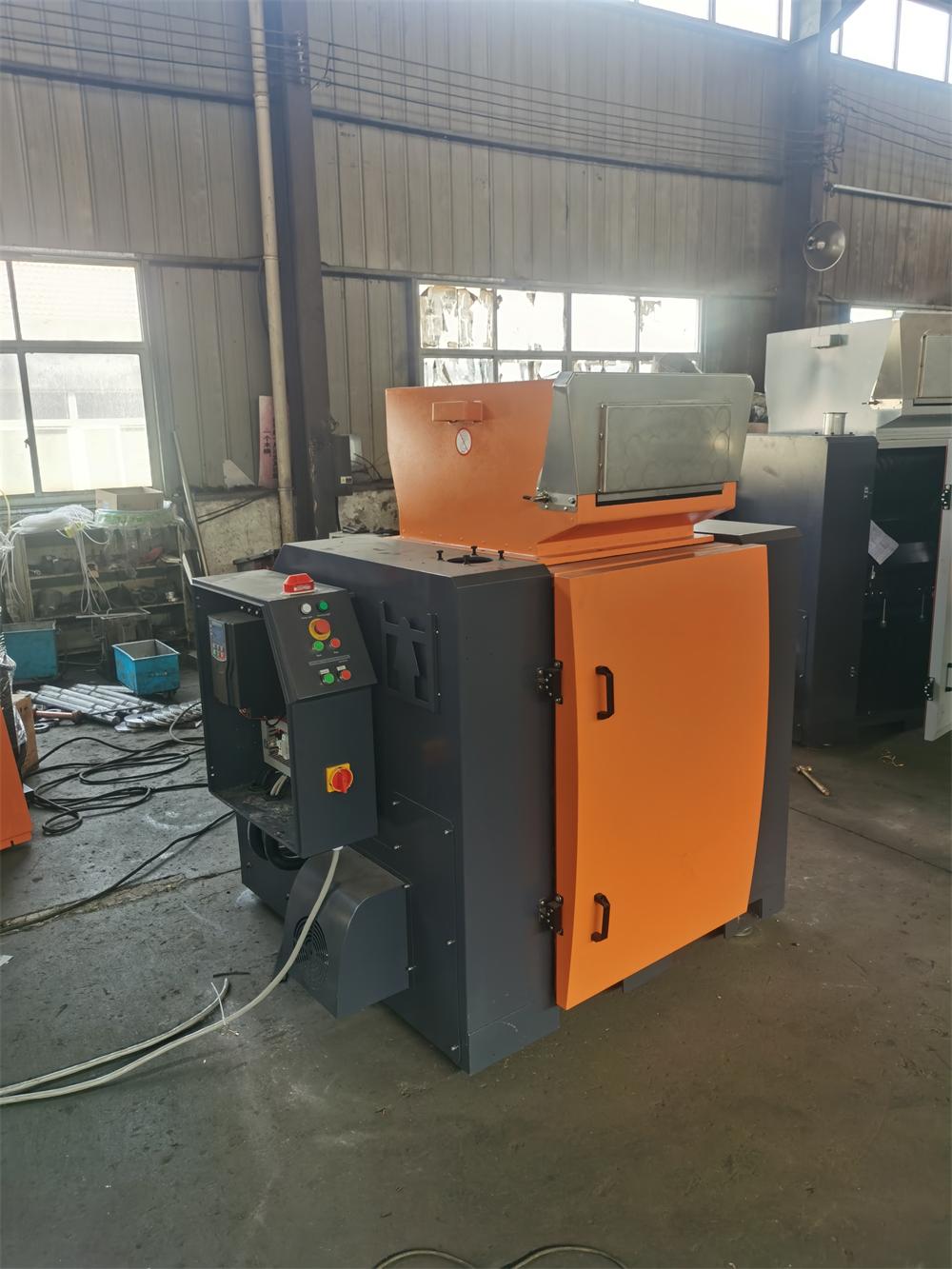
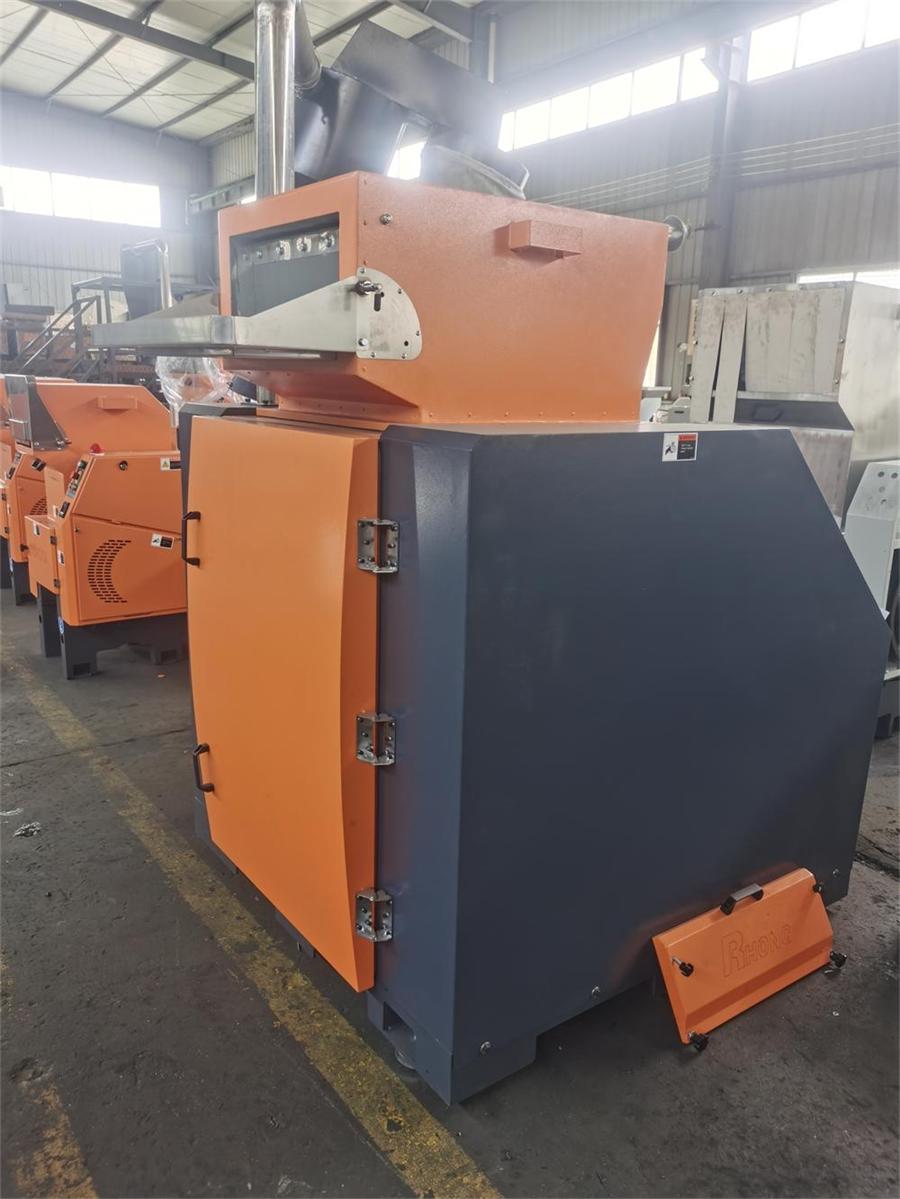
For small to mid-sized manufacturers that are expanding, the scalability of a centralized granulator is a big plus. Unlike standalone granulators, which you have to add as you add production lines, a well-sized Quiet Centralized Granulator can grow with your facility. Many of our clients start with a 1,200 kg per hour model when they have 5-10 production lines, then upgrade to a 2,500 kg per hour unit as they add more lines, without needing to rework the scrap handling piping or collection systems. That flexibility saves you money on retrofits down the line.
Now, let's address a common question we get: is the quiet design a compromise on durability? Absolutely not. Our Quiet Centralized Granulators use heavy-gauge steel chambers, high-torque motors rated for continuous 24/7 operation, and rotors balanced to within 0.05 mm, which reduces vibration and extends the life of all internal parts. We back every unit with a two-year warranty and 24/7 technical support, so if you have an issue, we can get it resolved quickly. That's a big difference from budget granulators, which often use thinner steel and lower-quality motors, leading to frequent breakdowns and lower overall capacity over time.
If you're still trying to figure out what capacity is right for you, here's a quick guide to help:
- Under 500 kg per hour: Ideal for small operations with 2-4 production lines, or facilities processing very low volumes of scrap. The compact, quiet design fits easily into smaller facilities without taking up too much space.
- 500-1,500 kg per hour: Our most popular range, perfect for mid-sized operations with 5-10 lines, balancing capacity and footprint.
- 1,500-3,000 kg per hour: For large operations with 10+ production lines, or facilities processing high volumes of scrap. This range is built for continuous, heavy-duty runs.
- Over 3,000 kg per hour: For very large-scale facilities, like automotive plants or consumer goods manufacturers processing scrap from 20+ lines. For this range, we recommend pairing our Quiet Centralized Granulator with our Powerful Granulator for pre-crushing oversized parts to maximize throughput.
At the end of the day, the right granulator capacity isn't just about how much you can process-it's about matching that capacity to your specific needs, while prioritizing a safe, productive workspace. A granulator that's too small will leave you with excess scrap that piles up, gets sent to landfill, or causes production delays. A granulator that's too large wastes energy and takes up unnecessary space. The Quiet Centralized Granulator line hits that sweet spot for most manufacturers, delivering reliable, high capacity without the noise that plagues traditional models.
If you're ready to learn more about the exact capacity for your scrap type and operation, or want to see our Quiet Centralized Granulator in action, our team is here to help. We can provide custom capacity testing, answer specific questions about installation or maintenance, and help you find the right model for your facility. Don't let loud, inefficient granulation hold your operation back-reach out to start a conversation about how our granulation solutions can boost your throughput and improve your workplace environment.
References
- Occupational Safety and Health Administration (OSHA). Noise Control in Manufacturing Facilities. U.S. Department of Labor, 2021.
- Plastics Industry Association. "2023 North American Plastics Scrap Management Report." Plastics Industry Association, 2023.
- Modern Plastics Machinery. "Centralized Granulation: Balancing Capacity, Noise, and Efficiency for 24/7 Operations." Modern Plastics, 2022.
- European Tyre and Rubber Manufacturers' Association. Sustainable Plastic Recycling: Equipment Best Practices. ETRMA, 2021.