

Can Rolled film Granulators be used for granulating agricultural films?
Jun 04, 2025
Leave a message
As a supplier of Rolled film Granulators, I often receive inquiries from customers in the agricultural sector about whether our machines can be used for granulating agricultural films. This is a crucial question, considering the growing emphasis on recycling and reusing agricultural plastics to reduce environmental impact and cut down on production costs. In this blog, I'll delve into the technical aspects, advantages, and potential challenges of using Rolled film Granulators for agricultural film granulation.
Technical Feasibility
Agricultural films, such as mulch films, greenhouse films, and silage films, are typically made from polyethylene (PE), which is a thermoplastic polymer. Rolled film Granulators are designed to process various types of plastic films, including those made of PE. The granulation process involves feeding the rolled agricultural film into the granulator, where it is shredded into smaller pieces by rotating blades. These blades are engineered to handle the flexibility and toughness of plastic films, ensuring efficient and consistent cutting.
The shredded plastic pieces are then further reduced in size and melted down to form uniform granules. Our Rolled film Granulators are equipped with advanced heating and melting systems that can precisely control the temperature, ensuring that the plastic is melted without degrading its properties. This is essential for maintaining the quality of the recycled granules, which can be used to manufacture new agricultural products or other plastic items.
Advantages of Using Rolled film Granulators for Agricultural Film Granulation
- Cost - effectiveness: Recycling agricultural films using Rolled film Granulators can significantly reduce the cost of purchasing new plastic materials. By reusing the recycled granules, farmers and agricultural product manufacturers can save a substantial amount of money in the long run.
- Environmental sustainability: Agricultural films are a major source of plastic pollution in the environment. When left in the fields or disposed of improperly, they can take hundreds of years to decompose, causing harm to soil, water, and wildlife. Granulating these films and reusing the materials helps to reduce plastic waste and minimize the environmental impact of agriculture.
- Quality control: Our Rolled film Granulators are designed to produce high - quality granules with consistent size and properties. This allows for better control over the manufacturing process when using the recycled granules, resulting in more reliable and durable agricultural products.
- Versatility: The recycled granules produced by our Rolled film Granulators can be used in a wide range of applications. They can be used to make new agricultural films, as well as other plastic products such as Plastic Film Granulator Machine, which shows the versatility of our granulation technology.
Potential Challenges and Solutions
- Contamination: Agricultural films are often contaminated with soil, pesticides, and other impurities. These contaminants can affect the quality of the recycled granules and damage the granulator. To address this issue, we recommend pre - cleaning the agricultural films before feeding them into the granulator. This can be done through a simple washing and drying process.
- Film thickness and type: Different agricultural films have varying thicknesses and compositions. Some films may be too thick or too thin for the granulator to handle effectively. Our Rolled film Granulators are adjustable and can be customized to accommodate different film thicknesses and types. Additionally, we offer Roll - feed Baby Granulators that are specifically designed for processing thinner films.
- Machine maintenance: Like any industrial equipment, Rolled film Granulators require regular maintenance to ensure optimal performance. We provide comprehensive maintenance services and training to our customers to help them keep their granulators in good working condition. We also offer spare parts for easy replacement, minimizing downtime in case of any breakdowns.
Case Studies
Many of our customers in the agricultural industry have successfully used our Rolled film Granulators to recycle their agricultural films. For example, a large - scale greenhouse farm was facing high costs for purchasing new greenhouse films. After implementing our granulation solution, they were able to recycle their used films and produce high - quality granules, which were then used to make new greenhouse films. This not only reduced their material costs but also improved their environmental performance.
Another customer, a manufacturer of agricultural pipes, used our Rolled film Granulators to recycle waste plastic films generated during their production process. The recycled granules were then used in the production of Pipe Crushers, resulting in significant cost savings and a more sustainable production process.
Conclusion
In conclusion, Rolled film Granulators can indeed be used for granulating agricultural films. They offer a cost - effective, environmentally sustainable, and versatile solution for recycling agricultural plastics. While there are some challenges associated with the process, these can be easily overcome with proper pre - treatment, machine customization, and regular maintenance.
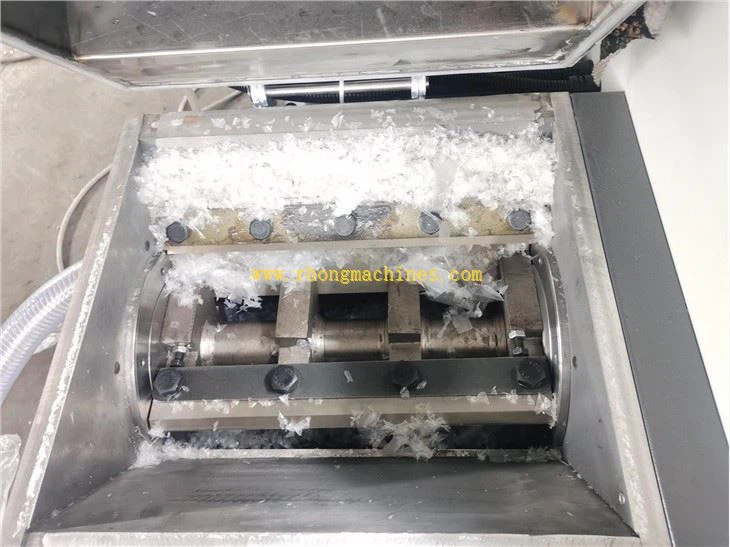

If you are in the agricultural industry and are looking for a reliable solution to recycle your agricultural films, I encourage you to contact us. Our team of experts can provide you with detailed information about our Rolled film Granulators, offer customized solutions based on your specific needs, and guide you through the entire process from installation to operation. We are committed to helping you achieve your recycling goals and contribute to a more sustainable future.
References
- "Plastic Recycling Technologies for Agricultural Applications" - Journal of Agricultural Engineering
- "Advances in Plastic Granulation Machinery" - Industrial Machinery Review
- "Environmental Impact of Agricultural Plastic Waste and Recycling Solutions" - Environmental Science Journal