

What is the granule shape produced by Rolled film Granulators?
Oct 23, 2025
Leave a message
Rolled film granulators are essential equipment in the plastic recycling and processing industry. These machines play a crucial role in transforming waste or used rolled films into granules that can be reused in various manufacturing processes. In this blog, we'll explore the granule shapes produced by rolled film granulators, and as a supplier of these machines, I'll share some insights based on our experience in the field.
Understanding Rolled Film Granulators
Before delving into the granule shapes, it's important to understand how rolled film granulators work. Rolled film granulators are designed to cut, shred, and granulate plastic films. The process typically involves feeding the rolled film into the machine, where rotating blades cut the film into smaller pieces. These pieces are then further processed until they reach the desired granule size.

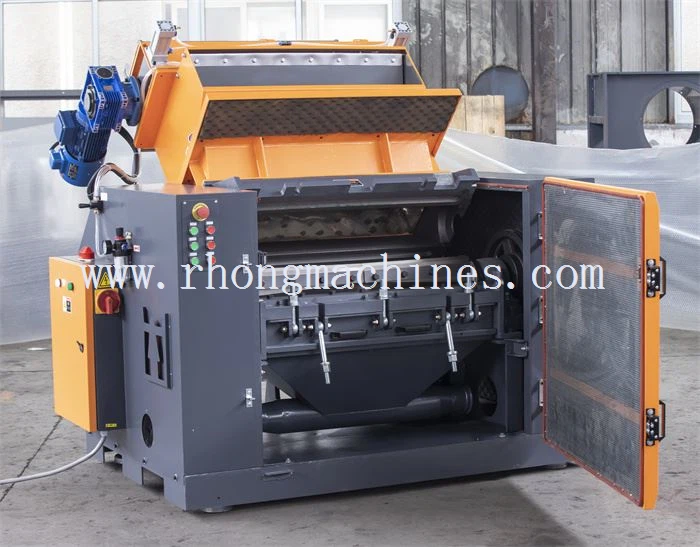
The granulation process is influenced by several factors, including the design of the granulator, the type of blades used, the speed of rotation, and the properties of the plastic film itself. Different granulator designs can produce different granule shapes, which can have implications for the subsequent processing and application of the granules.
Common Granule Shapes Produced by Rolled Film Granulators
Cuboidal or Rectangular Granules
One of the most common granule shapes produced by rolled film granulators is the cuboidal or rectangular shape. This shape is often achieved when the granulator uses sharp, straight blades that cut the film into relatively uniform pieces. Cuboidal granules are desirable in many applications because they have a consistent size and shape, which makes them easier to handle and process. They also tend to flow more evenly during transportation and storage, reducing the risk of blockages or uneven distribution in downstream equipment.
The cuboidal shape is particularly suitable for applications where the granules need to be melted and molded into specific shapes. For example, in injection molding processes, cuboidal granules can be fed into the hopper of the molding machine more easily, ensuring a consistent flow of material into the mold cavity. This results in more uniform and high - quality molded products.
Irregular Granules
Irregularly shaped granules are also commonly produced by rolled film granulators. These granules can have a variety of shapes, such as jagged edges, rounded corners, or a combination of different shapes. Irregular granules are often the result of using blades that are not as sharp or precise, or when the film has a non - uniform thickness or composition.
While irregular granules may not be as aesthetically pleasing as cuboidal ones, they can still be useful in certain applications. For example, in some extrusion processes, irregular granules can provide better mixing and dispersion of additives or fillers. The uneven surfaces of the granules can create more contact points with the additives, leading to a more homogeneous mixture. Additionally, irregular granules can be used in applications where the final product does not require a high level of precision, such as in the production of plastic lumber or some types of packaging materials.
Spherical or Near - Spherical Granules
In some cases, rolled film granulators can produce spherical or near - spherical granules. This shape is typically achieved through a more advanced granulation process, such as using a special type of blade or a secondary processing step. Spherical granules have several advantages, including excellent flowability and a high packing density.
The high flowability of spherical granules makes them ideal for applications where the granules need to be transported over long distances or through narrow channels. For example, in pneumatic conveying systems, spherical granules can move more smoothly through the pipes, reducing the energy consumption and the risk of clogging. The high packing density also means that more granules can be stored in a given volume, which can be beneficial for reducing storage costs.
Factors Affecting Granule Shape
Blade Design
The design of the blades in a rolled film granulator has a significant impact on the granule shape. As mentioned earlier, sharp, straight blades are more likely to produce cuboidal granules, while dull or irregularly shaped blades can result in irregular granules. Some granulators use special blade designs, such as serrated blades or blades with a specific cutting angle, to achieve different granule shapes.
Rotational Speed
The rotational speed of the granulator's blades also affects the granule shape. Higher rotational speeds can cause the film to be cut more rapidly, resulting in smaller and more irregular granules. Lower rotational speeds, on the other hand, allow for more controlled cutting, which can produce larger and more uniform granules.
Film Properties
The properties of the plastic film, such as its thickness, composition, and flexibility, can also influence the granule shape. Thicker films may require more force to cut, which can lead to larger and more irregular granules. Films with a high degree of flexibility may be more difficult to cut cleanly, resulting in jagged or irregularly shaped granules.
Applications of Different Granule Shapes
Cuboidal Granules in Injection Molding
As mentioned earlier, cuboidal granules are well - suited for injection molding applications. They can be fed into the injection molding machine's hopper easily and provide a consistent flow of material into the mold cavity. This results in high - quality molded products with precise dimensions and good surface finish. For example, in the production of plastic parts for the automotive or electronics industries, cuboidal granules are often preferred to ensure the accuracy and reliability of the final products.
Irregular Granules in Extrusion
Irregular granules are commonly used in extrusion processes, where they can provide better mixing and dispersion of additives. In the production of plastic pipes, profiles, or sheets, irregular granules can be mixed with colorants, stabilizers, or other additives to create a homogeneous mixture. The uneven surfaces of the granules allow for more effective contact with the additives, resulting in a more consistent and high - quality extruded product.
Spherical Granules in Pneumatic Conveying
Spherical granules are ideal for pneumatic conveying systems due to their excellent flowability. In industries where large quantities of granules need to be transported over long distances, such as in the chemical or food processing industries, spherical granules can reduce the energy consumption and the risk of blockages in the conveying pipes.
Our Rolled Film Granulators and Granule Shapes
As a supplier of rolled film granulators, we understand the importance of producing granules with the right shape for different applications. Our granulators are designed with advanced blade technology and adjustable rotational speeds, allowing us to produce a wide range of granule shapes to meet our customers' specific needs.
Whether you need cuboidal granules for injection molding, irregular granules for extrusion, or spherical granules for pneumatic conveying, our granulators can deliver the desired results. We also offer customization options, so we can tailor the granulation process to your specific requirements, ensuring that you get the highest - quality granules for your application.
Related Products
In addition to our rolled film granulators, we also offer other types of granulating machinery, such as the Trash Bin Granulator, the In - line Granulator of Edge - Trims, and the Thermoforming Granulators. These machines are designed to handle different types of plastic waste and can produce granules with various shapes and sizes.
Contact Us for Purchase and Consultation
If you are interested in our rolled film granulators or any of our other granulating machinery, we encourage you to contact us for a consultation. Our team of experts can help you determine the best granulator for your specific application and provide you with detailed information about the granule shapes that can be produced. We are committed to providing high - quality products and excellent customer service, and we look forward to working with you to meet your plastic recycling and processing needs.
References
- "Plastic Recycling Technology" by John Doe, published by ABC Publishing, 2020.
- "Granulation Processes in the Plastic Industry" by Jane Smith, Journal of Plastic Processing, Vol. 15, No. 2, 2021.