

What explosion - proof requirements should a proportional valve meet in a hazardous environment?
Oct 30, 2025
Leave a message
In hazardous environments where safety is of utmost importance, proportional valves play a crucial role in controlling fluid flow and pressure. As a proportional valve supplier, I understand the significance of ensuring that our products meet the necessary explosion - proof requirements. This blog will delve into the explosion - proof requirements that a proportional valve should meet in a hazardous environment.
Understanding Hazardous Environments
Hazardous environments are areas where there is a risk of explosion due to the presence of flammable gases, vapors, dusts, or fibers. These environments can be found in various industries such as oil and gas, chemical processing, mining, and pharmaceuticals. In these settings, even a small spark or overheating can trigger a catastrophic explosion.
Explosion - Proof Classification
The first step in determining the explosion - proof requirements for a proportional valve is to understand the classification of the hazardous environment. There are different international standards for classifying hazardous areas, such as the ATEX directive in Europe and the NEC (National Electrical Code) in the United States.
ATEX Classification
The ATEX directive classifies hazardous areas into zones based on the frequency and duration of the presence of an explosive atmosphere:
- Zone 0: An area in which an explosive gas atmosphere is present continuously or for long periods.
- Zone 1: An area in which an explosive gas atmosphere is likely to occur in normal operation.
- Zone 2: An area in which an explosive gas atmosphere is not likely to occur in normal operation and, if it occurs, will exist only for a short time.
For dust - filled environments, the zones are:
- Zone 20: An area in which an explosive dust atmosphere is present continuously or for long periods.
- Zone 21: An area in which an explosive dust atmosphere is likely to occur in normal operation.
- Zone 22: An area in which an explosive dust atmosphere is not likely to occur in normal operation and, if it occurs, will exist only for a short time.
NEC Classification
The NEC classifies hazardous locations into Classes, Divisions, and Groups:
- Class I: Locations where flammable gases or vapors are present.
- Division 1: An area where the hazardous gas or vapor is likely to exist under normal operating conditions.
- Division 2: An area where the hazardous gas or vapor is not likely to exist under normal operating conditions.
- Class II: Locations where combustible dust is present.
- Division 1: An area where combustible dust is likely to be in suspension in the air under normal operating conditions.
- Division 2: An area where combustible dust is not likely to be in suspension in the air under normal operating conditions.
- Class III: Locations where easily ignitable fibers or flyings are present.
- Division 1: An area where easily ignitable fibers or flyings are likely to be in suspension in the air under normal operating conditions.
- Division 2: An area where easily ignitable fibers or flyings are not likely to be in suspension in the air under normal operating conditions.
Explosion - Proof Design Requirements for Proportional Valves
Enclosure Design
The enclosure of a proportional valve in a hazardous environment must be designed to prevent the ingress of explosive substances. It should be able to withstand an internal explosion without allowing the flames or hot gases to escape and ignite the external explosive atmosphere.
- Flameproof Enclosure (Ex d): This type of enclosure is designed to contain an internal explosion and prevent the transmission of the explosion to the surrounding atmosphere. The enclosure must be able to withstand the pressure generated by an internal explosion without rupturing. The joints and gaps in the enclosure are carefully designed to cool the hot gases and flames so that they cannot ignite the external explosive atmosphere.
- Increased Safety Enclosure (Ex e): This enclosure is designed to minimize the risk of ignition sources such as sparks or excessive temperatures. It uses additional safety measures such as improved insulation, increased clearances, and special wiring techniques to prevent the formation of ignition sources.
Electrical Components
The electrical components of a proportional valve, such as the solenoid coils and control circuits, must be designed to prevent the generation of sparks or excessive temperatures.
- Intrinsic Safety (Ex i): Intrinsically safe electrical circuits are designed to limit the energy available in the circuit so that it cannot ignite an explosive atmosphere. This is achieved by using low - power components, current - limiting resistors, and voltage - limiting devices.
- Non - Sparking Components: All electrical components should be designed to avoid the generation of sparks. For example, the solenoid coils should be designed with proper insulation and winding techniques to prevent arcing.
Material Selection
The materials used in the construction of the proportional valve must be compatible with the hazardous environment. They should not react with the flammable substances present in the environment and should be able to withstand the corrosive effects of the substances.
- Corrosion - Resistant Materials: In environments where corrosive substances are present, the valve body and other components should be made of corrosion - resistant materials such as stainless steel or special alloys.
- Non - Sparking Materials: For parts that may come into contact with the explosive atmosphere, non - sparking materials such as brass or bronze can be used to prevent the generation of sparks.
Our Proportional Valve Products for Hazardous Environments
As a proportional valve supplier, we offer a range of products that meet the explosion - proof requirements for hazardous environments. Our RPV Proportional Valve For Rhong Machinery is designed with a flameproof enclosure and intrinsically safe electrical components, making it suitable for use in Zone 1 and Division 1 hazardous areas.

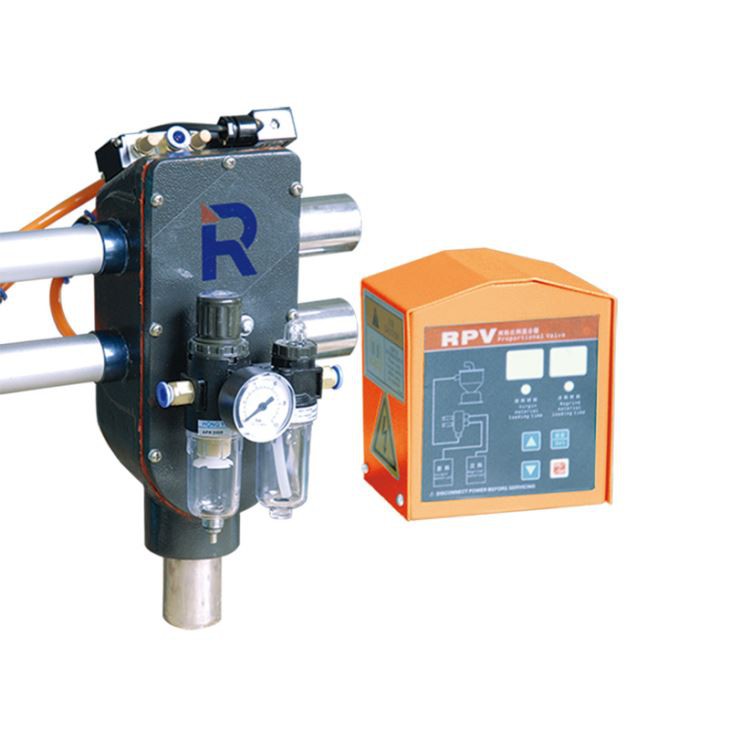
Our Two Material Ratio Valve 38MM is also engineered to meet the strict explosion - proof standards. It uses corrosion - resistant materials and non - sparking electrical components, ensuring reliable operation in hazardous environments.
Contact Us for Procurement
If you are in need of proportional valves for hazardous environments, we are here to assist you. Our team of experts can help you select the right valve for your specific application and ensure that it meets all the necessary explosion - proof requirements. Contact us to start the procurement process and discuss your needs.
References
- ATEX Directive 2014/34/EU
- National Electrical Code (NEC)
- International Electrotechnical Commission (IEC) standards on explosion - proof equipment