

How does the spool design affect the performance of a proportional valve?
Nov 03, 2025
Leave a message
As a leading supplier of proportional valves, I've witnessed firsthand the intricate relationship between spool design and valve performance. Proportional valves play a crucial role in various industrial applications, from hydraulic systems in heavy machinery to precise control in manufacturing processes. The spool, a key component within these valves, significantly influences how the valve operates and the overall performance it can deliver.
Understanding the Basics of Proportional Valves
Before delving into the impact of spool design, it's essential to understand the fundamental function of a proportional valve. A proportional valve is designed to control the flow rate or pressure of a fluid in a system proportionally to an input signal. This allows for precise and adjustable control, making it ideal for applications where accuracy is paramount.
The valve consists of several components, with the spool being one of the most critical. The spool is a cylindrical element that moves within the valve body to regulate the flow of fluid. By changing the position of the spool, the valve can adjust the size of the flow passage, thereby controlling the flow rate or pressure.
Key Aspects of Spool Design
The design of the spool can vary significantly, and several factors come into play when considering how it affects valve performance.
Spool Geometry
The shape and dimensions of the spool have a direct impact on the valve's flow characteristics. For example, a spool with a larger diameter may allow for a higher flow rate, but it also requires more force to move. On the other hand, a smaller diameter spool may offer more precise control but may limit the maximum flow capacity.
The contour of the spool also matters. A well-designed spool contour can help to minimize pressure drops and turbulence within the valve. For instance, a tapered spool can provide a more gradual change in flow area as it moves, resulting in smoother flow control.
Spool Land and Notch Design
Spool lands are the sections of the spool that seal against the valve body to prevent leakage. The width and length of the lands can affect the valve's sealing performance and its ability to maintain pressure. A wider land may provide better sealing but can also increase the friction between the spool and the valve body, making it more difficult to move.

Notches on the spool are used to control the flow of fluid more precisely. By carefully designing the shape and size of the notches, the valve can achieve different flow characteristics. For example, a V-shaped notch can provide a linear relationship between the spool position and the flow rate, which is desirable in many applications.
Spool Material
The material used to manufacture the spool is another important consideration. The spool must be able to withstand the forces and pressures within the valve, as well as resist wear and corrosion. Common materials for spools include stainless steel, brass, and various alloys. Each material has its own properties, and the choice of material depends on the specific requirements of the application.
Impact on Valve Performance
The spool design can have a profound impact on several aspects of valve performance.
Flow Control Accuracy
One of the primary functions of a proportional valve is to provide accurate flow control. A well-designed spool can help to achieve this by ensuring a linear relationship between the input signal and the flow rate. For example, a spool with precisely machined notches can provide a more predictable flow response, allowing for more accurate control of the system.
Response Time
The response time of a proportional valve is crucial in applications where rapid changes in flow or pressure are required. The spool design can affect the valve's response time by influencing the force required to move the spool and the friction between the spool and the valve body. A lighter spool or a design that reduces friction can result in a faster response time.
Pressure Drop
Pressure drop is an important consideration in any fluid system. A high pressure drop can lead to energy losses and reduced system efficiency. The spool design can help to minimize pressure drop by optimizing the flow path and reducing turbulence. For example, a spool with a smooth contour can allow for a more laminar flow, resulting in lower pressure drops.
Leakage
Leakage can occur when the spool does not seal properly against the valve body. The design of the spool lands and the material used can affect the valve's sealing performance. A well-designed spool with appropriate land dimensions and a high-quality sealing material can minimize leakage, ensuring that the valve operates efficiently.
Case Studies
To illustrate the importance of spool design, let's consider a few case studies.
Case Study 1: Industrial Mixing Machinery
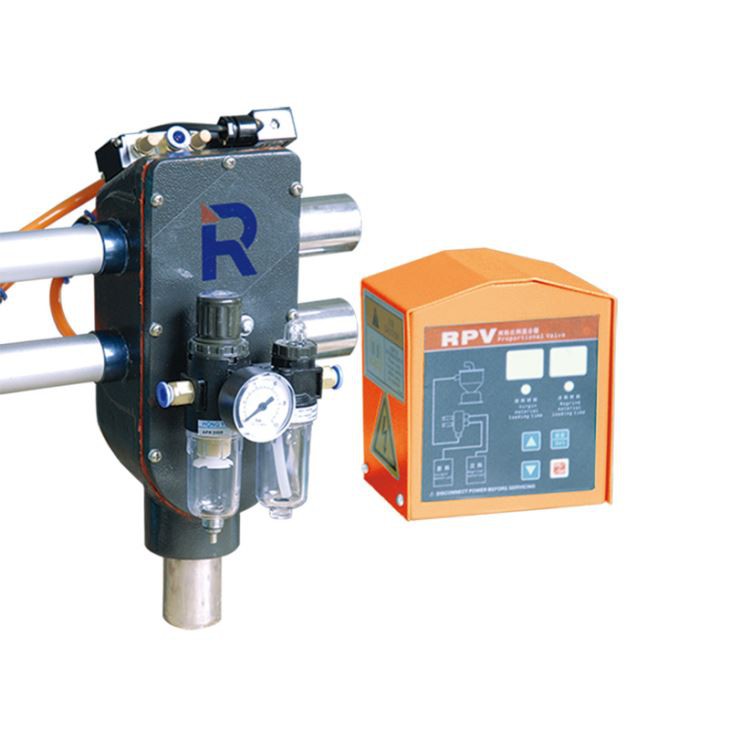
In an industrial mixing process, precise control of the flow of different materials is essential. A proportional valve with a well-designed spool can ensure accurate mixing ratios. For example, our RPV Proportional Valve For Rhong Machinery features a spool with carefully engineered notches that provide a linear flow response. This allows for precise control of the flow of each material, resulting in consistent and high-quality mixing.
Case Study 2: Hydraulic System in Construction Equipment
In a hydraulic system for construction equipment, rapid response and high flow capacity are crucial. Our Two Material Ratio Valve 38MM is designed with a spool that offers a balance between flow capacity and response time. The spool's geometry and material are optimized to ensure smooth operation and efficient performance, even under high pressures.
Conclusion
In conclusion, the spool design is a critical factor in determining the performance of a proportional valve. By carefully considering the spool geometry, land and notch design, and material, we can optimize the valve's flow control accuracy, response time, pressure drop, and leakage. As a supplier of proportional valves, we are committed to providing high-quality products that meet the specific needs of our customers.
If you are in the market for a proportional valve and want to learn more about how our spool design can benefit your application, we encourage you to contact us for a detailed discussion. Our team of experts is ready to assist you in selecting the right valve for your needs and to provide you with the best possible solution.
References
- Hydraulic Control Systems by Franklin F. Lewis, David M. Dawson, and Abdelhamid Tayebi
- Fluid Power Engineering by Anthony Esposito
- Proportional and Servo Valves: Design, Performance, and Application by William J. Moir