

How does a mold temperature controller work?
Oct 23, 2025
Leave a message
A mold temperature controller is an essential piece of equipment in the plastic processing industry, as well as other manufacturing sectors that involve molding processes. It plays a crucial role in maintaining the optimal temperature of the mold, which directly impacts the quality, efficiency, and consistency of the final products. As a leading supplier of mold temperature controllers, I am excited to share with you how these remarkable devices work.
Basic Principles of Mold Temperature Control
The primary function of a mold temperature controller is to regulate the temperature of the mold within a narrow and precise range. This is achieved through a closed - loop system that circulates a heat - transfer fluid, typically water or oil, through the mold. The controller continuously monitors the temperature of the fluid and adjusts the heating or cooling output accordingly.
The basic components of a mold temperature controller include a pump, a heater, a cooler, a temperature sensor, and a control unit. The pump is responsible for circulating the heat - transfer fluid through the mold and the entire system. The heater is used to increase the temperature of the fluid when it is below the set point, while the cooler is used to reduce the temperature when it exceeds the set point. The temperature sensor measures the actual temperature of the fluid, and the control unit processes this information and sends signals to the heater or cooler to maintain the desired temperature.
The Working Process of a Mold Temperature Controller
Let's take a detailed look at the step - by - step working process of a mold temperature controller:
1. Fluid Circulation
The process starts with the pump. The pump draws the heat - transfer fluid from a reservoir and forces it into the mold through a series of pipes. As the fluid flows through the channels in the mold, it exchanges heat with the mold, either absorbing heat from the mold if the mold is too hot or releasing heat to the mold if the mold is too cold. After passing through the mold, the fluid returns to the controller, where its temperature is measured.
2. Temperature Sensing
A temperature sensor, usually a thermocouple or a resistance temperature detector (RTD), is installed in the return line of the fluid. This sensor continuously measures the temperature of the returning fluid and sends an electrical signal to the control unit. The control unit compares this measured temperature with the pre - set temperature value.
3. Heating or Cooling
If the measured temperature is lower than the set point, the control unit activates the heater. The heater, which can be an electric heating element or a heat exchanger, adds heat to the fluid. The fluid then absorbs the heat and its temperature rises. The control unit monitors the temperature increase and adjusts the power output of the heater to ensure that the fluid reaches and maintains the set temperature.
Conversely, if the measured temperature is higher than the set point, the control unit activates the cooler. The cooler can be a water - cooled heat exchanger or a refrigeration system. The cooler removes heat from the fluid, causing its temperature to drop. Similar to the heating process, the control unit continuously monitors the temperature change and adjusts the cooling capacity to keep the fluid at the desired temperature.
4. Continuous Regulation
The entire process is repeated continuously in a closed - loop system. As long as the mold temperature controller is in operation, the pump keeps circulating the fluid, the temperature sensor keeps measuring the temperature, and the control unit keeps adjusting the heating or cooling output to maintain the set temperature. This ensures that the mold remains at a stable temperature throughout the molding process.
Different Types of Mold Temperature Controllers and Their Working Characteristics
There are several types of mold temperature controllers available in the market, each with its own unique working characteristics.
Water - Type Mold Temperature Controllers
Water - type mold temperature controllers use water as the heat - transfer fluid. They are widely used in many applications due to their low cost, high heat - transfer efficiency, and environmental friendliness. Water - type controllers are suitable for applications where the mold temperature is relatively low, typically below 100°C.
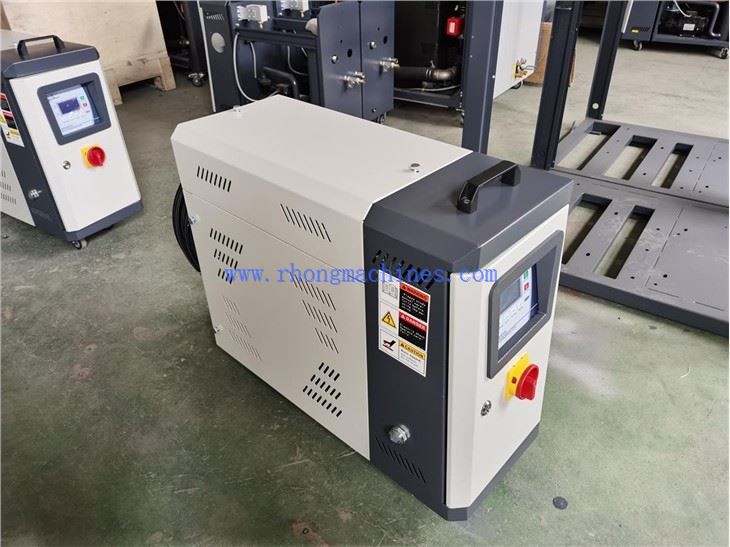
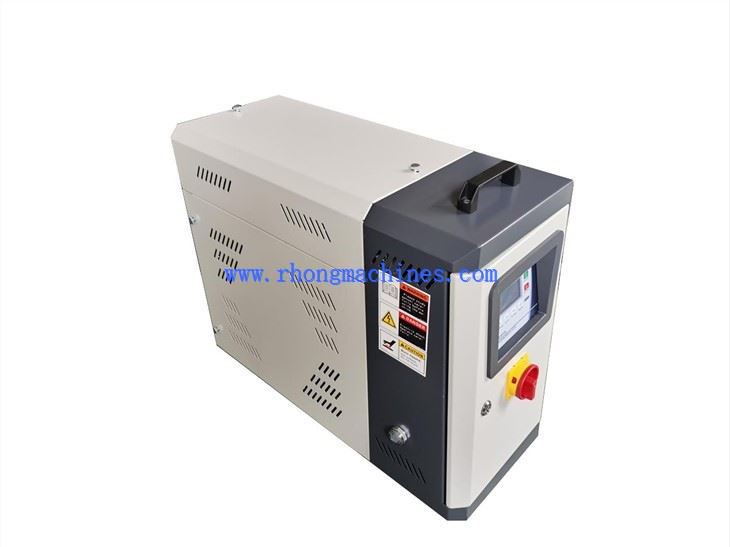
For example, our Mold Temperature Controller(Water Type) is designed with advanced control algorithms to ensure precise temperature regulation. The water is circulated through the mold and heated or cooled as needed. The advantage of water - type controllers is that water has a high specific heat capacity, which means it can absorb or release a large amount of heat with a relatively small change in temperature.
Two - Stage Water Type Mold Temperature Controllers
Two - stage water type mold temperature controllers are an upgraded version of the standard water - type controllers. They are capable of providing more precise temperature control, especially in applications where the temperature requirements are more stringent. These controllers have two separate heating and cooling stages, which allows for more accurate adjustment of the fluid temperature.
Our Two Stage Water Type Mold Temperature Controller uses a sophisticated control system to manage the two - stage operation. In the first stage, a rough adjustment is made to bring the fluid temperature close to the set point. In the second stage, a fine adjustment is made to ensure that the temperature is maintained within a very narrow range.
Dual Temp Mold Water Heaters
Dual temp mold water heaters are designed to provide two different temperature zones in the mold. This is useful in applications where different parts of the mold require different temperatures. For example, in some complex plastic molding processes, the core and the cavity of the mold may need to be at different temperatures to achieve better product quality.
Our Dual Temp Mold Water Heater has two independent heating and control systems, which can be set to different temperature values. The controller circulates water through the two temperature zones separately and maintains the desired temperatures in each zone.
Advantages of Using a Mold Temperature Controller
Using a mold temperature controller offers several significant advantages in the manufacturing process:
Improved Product Quality
By maintaining a stable and precise mold temperature, the controller helps to reduce defects such as warping, shrinkage, and surface imperfections in the molded products. This results in higher - quality products with better dimensional accuracy and a more consistent appearance.
Increased Production Efficiency
A well - regulated mold temperature allows for faster cycle times in the molding process. The plastic material can flow more easily and solidify more quickly, which reduces the overall production time and increases the output.
Extended Mold Lifespan
A stable temperature environment reduces thermal stress on the mold, which can extend its service life. This saves costs associated with mold replacement and maintenance.
Conclusion and Invitation to Contact
In conclusion, a mold temperature controller is a vital component in modern manufacturing processes. Its ability to maintain a precise and stable mold temperature has a profound impact on product quality, production efficiency, and mold lifespan.
As a leading supplier of mold temperature controllers, we offer a wide range of high - quality products, including Two Stage Water Type Mold Temperature Controller, Dual Temp Mold Water Heater, and Mold Temperature Controller(Water Type). Our products are designed with the latest technology and high - quality components to ensure reliable performance and long - term durability.
If you are interested in learning more about our mold temperature controllers or are looking to purchase a controller for your manufacturing process, we invite you to contact us. Our experienced sales team is ready to provide you with detailed product information, technical support, and competitive pricing. We look forward to working with you to improve your manufacturing efficiency and product quality.
References
- ASM Handbook, Volume 15: Casting, ASM International
- Plastics Processing Handbook, Hanser Publications
- Injection Molding Handbook, Carl Hanser Verlag