

Can a proportional valve be used in high - temperature environments?
May 12, 2025
Leave a message
Can a proportional valve be used in high - temperature environments? This is a question that often comes up in industrial applications, and as a proportional valve supplier, I'm here to provide a detailed analysis.

Understanding Proportional Valves
Proportional valves are essential components in many fluid control systems. They offer precise control over the flow rate, pressure, or direction of a fluid by adjusting the valve opening in proportion to an input signal. These valves are widely used in various industries, including manufacturing, automotive, and aerospace, due to their ability to provide accurate and repeatable control.
The basic principle behind a proportional valve involves the use of an electromagnetic actuator. When an electrical signal is applied to the actuator, it generates a magnetic field that moves a valve spool or poppet. The position of the spool or poppet determines the amount of fluid that can pass through the valve, allowing for fine - tuned control.
Challenges of High - Temperature Environments
High - temperature environments present several challenges for proportional valves. One of the primary concerns is the effect of heat on the valve materials. Most proportional valves are made of metals and elastomers. At high temperatures, metals can expand, which may lead to dimensional changes in the valve components. This expansion can cause issues such as increased friction, misalignment of the valve spool or poppet, and even seizure in extreme cases.
Elastomers, which are often used for seals and gaskets in proportional valves, are also highly sensitive to temperature. High temperatures can cause elastomers to degrade, lose their elasticity, and develop cracks. Once the seals fail, it can lead to fluid leakage, which not only reduces the efficiency of the valve but can also pose safety hazards in some applications.
Another challenge is the impact of high temperatures on the electrical components of the proportional valve. The electromagnetic actuator, for example, may experience changes in its magnetic properties at elevated temperatures. This can result in a decrease in the actuator's performance, leading to inaccurate control of the valve opening. Additionally, the electrical insulation of the actuator and other electronic components may be compromised, increasing the risk of short - circuits and system failures.
Proportional Valves Suitable for High - Temperature Environments
Despite the challenges, there are proportional valves that are designed to operate in high - temperature environments. These valves are typically constructed using high - temperature resistant materials. For the valve body and internal components, materials such as stainless steel alloys with high heat - resistant properties are often used. These alloys can withstand high temperatures without significant expansion or deformation, ensuring the proper functioning of the valve.
In terms of seals and gaskets, special high - temperature elastomers or non - elastomeric materials are employed. For example, some valves use graphite - based seals, which can maintain their sealing properties at extremely high temperatures. These seals are resistant to heat, chemical corrosion, and wear, providing a reliable sealing solution in harsh environments.
The electrical components of high - temperature proportional valves are also designed to be heat - resistant. The electromagnetic actuators are often encapsulated in materials that can dissipate heat effectively and protect the internal components from the high - temperature environment. Additionally, the electrical insulation is made from materials that can withstand high temperatures without breaking down.

Our Product Offerings
As a proportional valve supplier, we offer a range of products suitable for high - temperature applications. Our Two Material Ratio Valve 38MM is designed with high - temperature resistant materials. The valve body is made of a special stainless steel alloy that can withstand temperatures up to [X] degrees Celsius. The seals are made of a high - performance graphite - based material, ensuring reliable sealing even in extreme heat. This valve is ideal for applications where precise control of the ratio of two materials is required in high - temperature environments, such as in chemical processing plants.
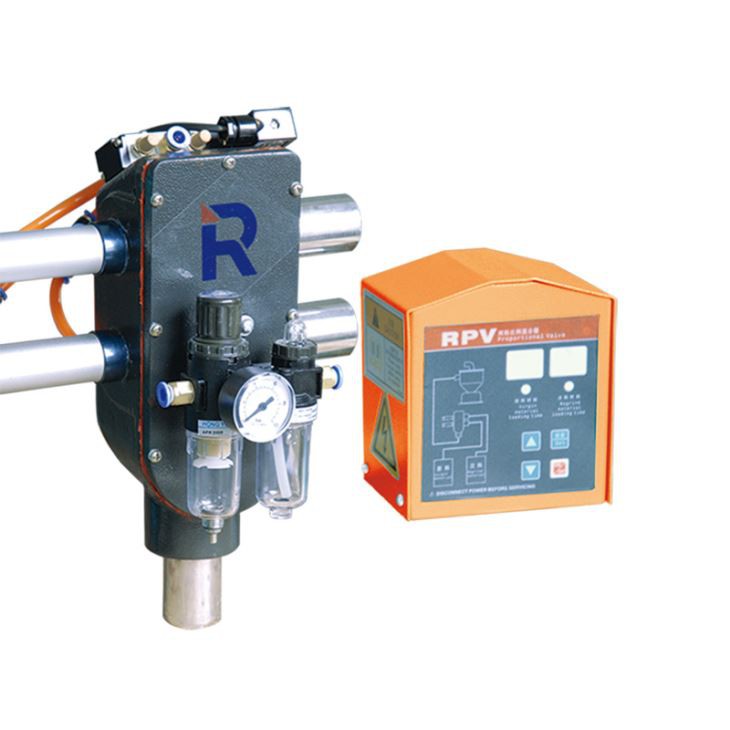
Another product in our portfolio is the RPV Proportional Valve For Rhong Machinery. This valve is specifically engineered for use in high - temperature machinery. It features an advanced electromagnetic actuator that is designed to maintain its performance at high temperatures. The electrical insulation of the actuator is made from a heat - resistant polymer, providing long - term reliability in harsh environments.
Case Studies
To illustrate the effectiveness of our high - temperature proportional valves, let's look at a few case studies. In a large - scale glass manufacturing plant, they were facing issues with the proportional valves in their furnace control system. The high temperatures in the furnace were causing the valves to malfunction, leading to inconsistent glass quality. After installing our high - temperature proportional valves, the plant noticed a significant improvement in the control of the fuel and air flow. The valves were able to operate reliably at the high furnace temperatures, resulting in more consistent glass production and reduced waste.
In an automotive engine testing facility, they needed to control the flow of coolant in a high - temperature testing environment. The standard proportional valves they were using were failing due to the heat. Our high - temperature proportional valves were installed, and they provided accurate control of the coolant flow, ensuring the proper testing of the engines without any valve - related failures.
Factors to Consider When Using Proportional Valves in High - Temperature Environments
When considering using proportional valves in high - temperature environments, there are several factors to keep in mind. Firstly, the maximum operating temperature of the valve must be carefully matched to the actual temperature of the application. It's important to consider not only the average temperature but also any temperature spikes that may occur during the operation.
Secondly, the compatibility of the valve materials with the fluid being controlled is crucial. Some fluids may react with the valve materials at high temperatures, leading to corrosion or other forms of degradation. It's necessary to choose valves with materials that are chemically compatible with the fluid under high - temperature conditions.
Finally, proper installation and maintenance are essential. The valve should be installed in a way that allows for adequate heat dissipation. Regular maintenance, including inspection of the seals, electrical connections, and valve components, should be carried out to ensure the long - term performance of the valve.
Conclusion
In conclusion, while high - temperature environments pose significant challenges for proportional valves, it is indeed possible to use them effectively. By using high - temperature resistant materials, advanced design techniques, and proper installation and maintenance, proportional valves can provide reliable and precise control in these harsh conditions.
As a proportional valve supplier, we are committed to providing high - quality products that meet the needs of our customers in high - temperature applications. If you are looking for proportional valves for your high - temperature projects, we invite you to contact us for a detailed discussion. Our team of experts can help you select the most suitable valve for your specific requirements and provide you with all the necessary technical support.
References
- "Fluid Power Technology" by David Crolla
- "Industrial Valves: Selection and Sizing" by John N. Fox