

What is the mixing mechanism of a Spiral Color Mixer?
Jan 07, 2026
Leave a message
Hey there! As a supplier of Spiral Color Mixers, I often get asked about how these nifty machines work. So, I thought I'd take a deep dive into the mixing mechanism of a Spiral Color Mixer and share all the juicy details with you.
The Basics of a Spiral Color Mixer
First off, let me give you a quick rundown of what a Spiral Color Mixer is. It's a machine used to blend different colors of plastic granules, powders, or other materials evenly. This is super important in industries like plastics manufacturing, where consistent color distribution is key for producing high - quality products.
The Main Components
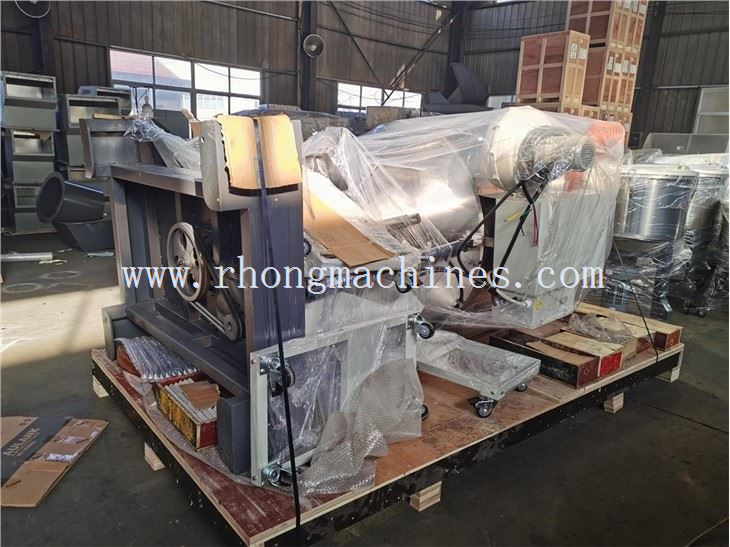
A Spiral Color Mixer typically consists of a few main parts. There's the mixing barrel, which is where all the action happens. Inside the barrel, there's a spiral screw. This screw is the heart of the mixer and plays a crucial role in the mixing process. There's also a motor that powers the rotation of the screw, and a control panel that allows operators to set the mixing time, speed, and other parameters.
How the Mixing Happens
The mixing mechanism of a Spiral Color Mixer is based on a combination of vertical and horizontal movement. When you load the materials into the mixing barrel, the motor starts to rotate the spiral screw. As the screw turns, it does two main things.
Vertical Movement
The spiral screw moves the materials from the bottom of the barrel to the top. This vertical movement is essential because it helps to lift the heavier or settled materials and redistributes them throughout the mixture. Imagine a pile of different colored sand at the bottom of a bucket. By using a tool to lift the sand from the bottom to the top, you're starting to break up any clumps and spread the colors around. In a Spiral Color Mixer, the screw acts like that tool, constantly lifting and dropping the materials to promote a more even blend.
Horizontal Movement
At the same time, as the screw is rotating, it also causes a horizontal movement of the materials. The materials are pushed around the inner wall of the mixing barrel. This horizontal agitation further breaks down any remaining clumps and ensures that the colors are mixed uniformly. Think of it like stirring a pot of soup. The movement back and forth and around the pot helps to combine all the ingredients. In the mixer, the horizontal movement of the materials achieves a similar effect, but on a much more efficient scale.
Different Types of Spiral Color Mixers and Their Mixing Mechanisms
Barrel Spiral Mixers
Barrel Spiral Mixers are a type of Spiral Color Mixer. These mixers have a barrel - shaped design, and the spiral screw is usually located in the center of the barrel. The mixing mechanism in barrel spiral mixers is quite straightforward. The screw rotates, lifting the materials vertically and causing them to move horizontally around the barrel. The shape of the barrel allows for a large volume of materials to be mixed at once. The vertical and horizontal movements work together to ensure that the colors are evenly distributed throughout the batch.
Vertical Screw Plastic Color Mixer
The Vertical Screw Plastic Color Mixer is another popular option. In this type of mixer, the screw is vertically oriented, and it moves the materials from the bottom to the top in a continuous loop. The vertical screw design is very effective at handling different types of materials, including those with different densities. As the materials are lifted to the top, they fall back down around the sides of the screw, creating a circular flow. This circular flow enhances the mixing process by constantly re - introducing the materials to different parts of the mixture.
Vertical Mixer
Vertical Mixers also have a unique mixing mechanism. They use a vertical screw to move the materials up and down, but they may also have additional features like paddles or blades to enhance the horizontal mixing. These extra components help to break up any stubborn clumps and ensure a more thorough blend. The vertical movement of the screw combined with the horizontal agitation of the paddles or blades results in a highly efficient mixing process.
Factors Affecting the Mixing Mechanism
There are several factors that can affect how well a Spiral Color Mixer works. One of the most important factors is the speed of the screw rotation. If the screw rotates too slowly, the materials may not be mixed thoroughly, and there could be uneven color distribution. On the other hand, if the screw rotates too quickly, it could cause the materials to become overly agitated, which might lead to problems like material degradation or excessive dust generation.
The shape and design of the mixing barrel also play a role. A well - designed barrel can help to optimize the flow of materials and ensure that they are mixed evenly. The size and pitch of the spiral screw are also crucial. A larger screw may be able to handle more materials at once, but it might not be as effective at mixing small batches. The pitch of the screw affects how quickly the materials are lifted and moved around, so it needs to be carefully chosen based on the specific materials being mixed.
The type of materials being mixed is another important factor. Different materials have different densities, particle sizes, and flow properties. For example, a fine powder may require a different mixing speed and mechanism than a coarse granule. Some materials may also be more prone to clumping, which requires a more aggressive mixing action to break up the clumps.
Benefits of Understanding the Mixing Mechanism
If you're using a Spiral Color Mixer in your business, understanding its mixing mechanism can bring several benefits. Firstly, it allows you to optimize the mixing process. By adjusting the speed, time, and other parameters based on the specific needs of your materials, you can ensure that you get the best possible color mix every time. This can lead to higher - quality products and fewer rejects.
Secondly, understanding the mixing mechanism can help you troubleshoot any problems that may arise. If you notice that the colors aren't mixing properly, you can analyze the mixing process and determine if there's an issue with the speed, the screw, or the materials themselves. This can save you time and money by allowing you to quickly identify and fix the problem.
Conclusion
So, there you have it – a detailed look at the mixing mechanism of a Spiral Color Mixer. These machines are really fascinating in how they use a combination of vertical and horizontal movements to achieve an even blend of colors. Whether you're in the plastics industry or any other field that requires color mixing, using a Spiral Color Mixer can make your production process much more efficient.

If you're interested in learning more about our Spiral Color Mixers or if you're thinking about making a purchase, we'd love to hear from you. Just reach out to us, and we'll be happy to have a chat about how our mixers can meet your specific needs.
References
- General knowledge of plastics processing machinery
- Industry standards and best practices for color mixing in manufacturing.