

What is the cooling capacity of a mold temperature controller?
Sep 26, 2025
Leave a message
Hey there! As a supplier of Mold Temperature Controllers, I often get asked about the cooling capacity of these nifty machines. So, I thought I'd take a deep dive into this topic and share everything you need to know.
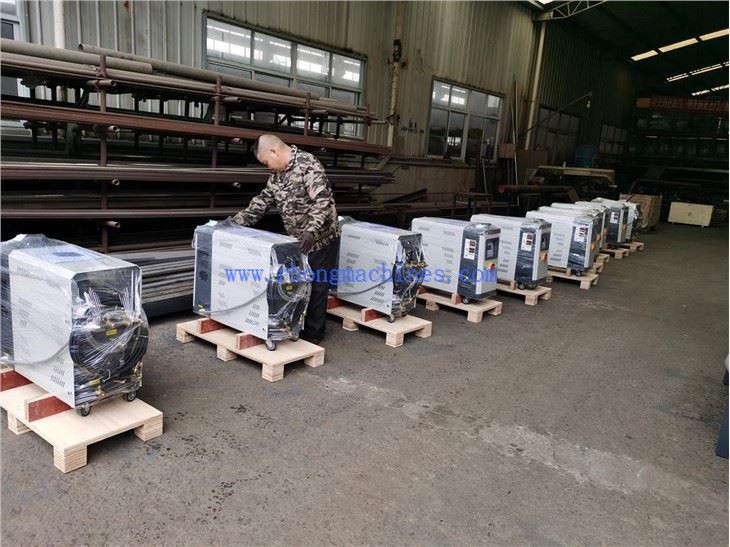
First off, let's understand what a mold temperature controller is. It's a device that helps maintain a consistent temperature in molds during various manufacturing processes, like injection molding, blow molding, and die - casting. This is super important because the temperature of the mold can have a huge impact on the quality of the final product.

What is Cooling Capacity?
Cooling capacity is basically the amount of heat that a mold temperature controller can remove from the mold per unit of time. It's usually measured in kilowatts (kW) or British Thermal Units per hour (BTU/hr). Think of it as the muscle power of the controller when it comes to getting rid of excess heat.
The cooling capacity you need depends on several factors. One of the main factors is the size of the mold. Larger molds generally generate more heat during the manufacturing process, so they require a controller with a higher cooling capacity. For example, if you're working with a massive industrial - scale mold for making car parts, you'll need a controller that can handle a significant amount of heat.
Another factor is the type of material being molded. Different materials have different heat - generating properties. Plastics, for instance, can vary widely in terms of how much heat they produce when being molded. Some high - performance plastics may generate a lot of heat, and you'll need a controller with a beefy cooling capacity to keep the mold at the right temperature.
The production cycle time also plays a role. If you have a fast - paced production line where molds are being filled and emptied rapidly, the heat build - up will be quicker. In this case, you'll need a controller that can cool the mold down fast enough to keep up with the production speed.
Types of Mold Temperature Controllers and Their Cooling Capacities
There are two main types of mold temperature controllers: water - type and oil - type. Let's take a look at each of them and their cooling capabilities.
Water - Type Mold Temperature Controllers
Water - type controllers are quite popular because water is an excellent heat transfer medium. It can absorb and carry away heat efficiently. These controllers are often used for applications where the required temperature range is relatively low, usually up to around 120°C.
The cooling capacity of water - type controllers can vary depending on their design and size. Smaller water - type controllers, which are suitable for smaller molds or less demanding applications, may have a cooling capacity of around 1 - 5 kW. These are great for things like making small plastic toys or electronic components.
On the other hand, larger industrial - grade water - type controllers can have a cooling capacity of 10 kW or more. They can handle the heat generated by big molds used in industries like automotive and aerospace. If you're interested in learning more about water - type controllers, you can check out our Water Temperature Controller.
Oil - Type Mold Temperature Controllers
Oil - type controllers are used when you need to maintain higher temperatures, typically up to 350°C or even higher. Oil has a higher boiling point than water, which makes it suitable for high - temperature applications.
The cooling capacity of oil - type controllers also varies. Smaller oil - type controllers may have a cooling capacity of around 3 - 10 kW. These are often used for smaller molds in industries like medical device manufacturing, where high - precision molding at elevated temperatures is required.
Larger oil - type controllers can have a cooling capacity of 20 kW or more. These are used in heavy - duty applications such as molding large - scale industrial parts. If you're in the market for an oil - type mold temperature controller, you can take a look at our Oil Type Mold Temerature Controller Rhong Equipment.
How to Calculate the Required Cooling Capacity
Calculating the exact cooling capacity you need can be a bit tricky, but there are some basic formulas and guidelines you can follow.
A simple way to estimate the cooling capacity is to consider the heat generated by the plastic material during the molding process. The heat generated (Q) can be calculated using the formula Q = m × Cp × ΔT, where m is the mass of the plastic being molded, Cp is the specific heat capacity of the plastic, and ΔT is the temperature change of the plastic during the molding process.
Once you've calculated the heat generated, you need to account for other factors like heat losses to the environment and the efficiency of the cooling system. A general rule of thumb is to add a safety margin of around 20 - 30% to the calculated heat load to ensure that the controller can handle any unexpected heat spikes.
However, for a more accurate calculation, it's often a good idea to consult with a professional or use specialized software. Our team of experts can also help you determine the right cooling capacity for your specific application. If you're interested in our Mold Temperature Controller(Water Type), we can provide you with all the technical support you need.
Why Choosing the Right Cooling Capacity Matters
Choosing the right cooling capacity is crucial for several reasons. Firstly, it ensures the quality of the final product. If the mold temperature is not properly controlled, it can lead to defects in the molded parts, such as warping, shrinkage, or uneven surfaces.
Secondly, it affects the efficiency of the production process. A controller with the right cooling capacity can help you maintain a consistent production speed. If the cooling capacity is too low, the mold may overheat, and you'll have to slow down the production line to let the mold cool down. On the other hand, if the cooling capacity is too high, you're wasting energy and money on an over - sized controller.
Wrapping Up and Getting in Touch
In conclusion, understanding the cooling capacity of a mold temperature controller is essential for anyone involved in the molding industry. Whether you're a small - scale manufacturer or a large - scale industrial operation, choosing the right controller with the appropriate cooling capacity can make a big difference in the quality of your products and the efficiency of your production process.
If you're still not sure which mold temperature controller is right for you or have any questions about cooling capacity, don't hesitate to reach out to us. We're here to help you make the best choice for your specific needs. Contact us, and we can start a discussion about your requirements and find the perfect controller for your operation.
References
- "Molding Process Handbook" - A comprehensive guide on various molding processes and temperature control.
- "Heat Transfer in Industrial Molding" - A technical paper discussing heat generation and removal in molding operations.