

What is the allowable voltage range for a proportional valve?
Dec 05, 2025
Leave a message
Hey there! As a supplier of proportional valves, I often get asked about the allowable voltage range for these nifty devices. So, I thought I'd take a few minutes to break it down for you.
First off, let's talk about what a proportional valve is. In simple terms, it's a valve that can control the flow of fluid (like oil or gas) in proportion to an electrical input signal. This makes it super useful in a whole bunch of applications, from industrial machinery to automotive systems.
Now, the allowable voltage range for a proportional valve can vary quite a bit depending on the specific model and manufacturer. But in general, most proportional valves are designed to work within a range of around 0 - 10 volts DC. This is because a 0 - 10V signal is a common standard in the industrial control world, and it's relatively easy to generate and manipulate.
Why is this voltage range so important? Well, the voltage you apply to the proportional valve determines the position of its spool or poppet, which in turn controls the flow rate of the fluid. If you apply too little voltage, the valve might not open enough, and you won't get the flow you need. On the other hand, if you apply too much voltage, you could damage the valve or cause it to malfunction.
Let's take a closer look at how this works. When you send a voltage signal to a proportional valve, it activates a solenoid. The solenoid creates a magnetic field that moves the spool or poppet inside the valve. The stronger the magnetic field (which is determined by the voltage), the further the spool or poppet moves, and the more fluid can flow through the valve.
But it's not just about getting the right voltage; it's also about how stable that voltage is. Fluctuations in voltage can cause the valve to open and close erratically, leading to inconsistent flow rates. That's why it's important to use a power supply that can provide a stable and accurate voltage.

Some proportional valves are also designed to work with different types of input signals, like current signals (usually 4 - 20 mA). These valves have a built - in converter that turns the current signal into a voltage signal that the solenoid can understand. The allowable current range for these valves is typically 4 - 20 mA, and they're often used in applications where long - distance signal transmission is required.
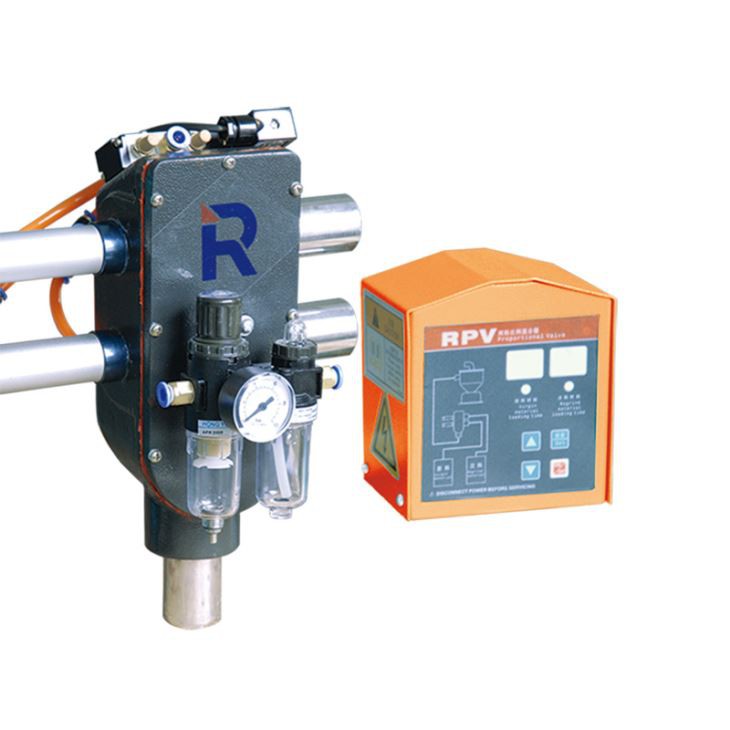
Now, as a supplier, we offer a wide range of proportional valves to suit different needs. For example, we have the RPV Proportional Valve For Rhong Machinery. This valve is specifically designed for use in Rhong machinery and has a well - defined allowable voltage range that's optimized for that particular application.
Another popular product is the Two Material Ratio Valve 38MM. This valve is great for applications where you need to precisely control the ratio of two different materials. It also has a reliable voltage range that ensures consistent performance.
When you're choosing a proportional valve, it's important to consider the allowable voltage range in the context of your overall system. You need to make sure that your power supply can provide the right voltage and that the voltage signal is compatible with the valve's input requirements.
If you're not sure what voltage range you need, don't worry! Our team of experts is always here to help. We can work with you to understand your application and recommend the best proportional valve for your needs.
In addition to the voltage range, there are other factors to consider when selecting a proportional valve. Things like the flow rate, pressure rating, and response time are all important. The flow rate tells you how much fluid the valve can handle, the pressure rating indicates the maximum pressure the valve can withstand, and the response time shows how quickly the valve can open and close in response to a change in the input signal.
So, to sum it up, the allowable voltage range for a proportional valve is a crucial factor that determines its performance. Most valves work within a 0 - 10V DC range, but it can vary depending on the model. Make sure you choose a valve with a voltage range that's compatible with your system, and don't hesitate to reach out to us if you need any help.
If you're interested in purchasing a proportional valve or have any questions about our products, we'd love to hear from you. Just get in touch with us, and we'll start the conversation about how we can meet your needs.
References:
- Industrial Valve Handbook: Covers general information about valve operation and specifications.
- Proportional Valve Manufacturer's Manuals: Provide detailed information about specific valve models and their allowable voltage ranges.