

What factors affect the granule quality of small granulators?
Oct 24, 2025
Leave a message
What factors affect the granule quality of small granulators?
As a supplier of small granulators, I've witnessed firsthand the importance of granule quality in various industries. Whether it's in the plastics, food, or pharmaceutical sectors, the quality of granules produced by small granulators can significantly impact the final product's performance and marketability. In this blog post, I'll explore the key factors that affect the granule quality of small granulators and provide insights on how to optimize them.
1. Raw Material Characteristics
The quality of the raw materials used in the granulation process is fundamental to the final granule quality. Different materials have distinct physical and chemical properties that can influence granulation. For example, the particle size, shape, density, and moisture content of the raw materials play crucial roles.
- Particle Size and Shape: Fine powders tend to have better flowability and can form more uniform granules compared to coarse particles. Irregularly shaped particles may lead to uneven granule formation and poor packing density. When the raw material particles are too large, they may not be effectively bonded together during granulation, resulting in weak or brittle granules. On the other hand, extremely fine particles can cause issues such as dust generation and agglomeration problems.
- Density: The density of the raw material affects the bulk density of the granules. If the raw material has a low density, the resulting granules may also have a low bulk density, which can impact handling, storage, and transportation. Additionally, differences in density between different components of the raw material mixture can lead to segregation during the granulation process, affecting the homogeneity of the granules.
- Moisture Content: Moisture content is a critical factor in granulation. Excessive moisture can cause the raw materials to stick together, leading to clogging in the granulator and the formation of large, irregularly shaped granules. Insufficient moisture, on the other hand, may result in poor binding and the production of powdery or friable granules. The optimal moisture content varies depending on the type of raw material and the granulation method used.
2. Granulation Method
There are several granulation methods available for small granulators, including wet granulation, dry granulation, and melt granulation. Each method has its own advantages and limitations, and the choice of method can significantly affect the granule quality.
- Wet Granulation: In wet granulation, a liquid binder is added to the raw materials to form granules. This method is widely used because it can improve the flowability, compressibility, and dissolution properties of the granules. However, the amount and type of binder, as well as the drying process after granulation, need to be carefully controlled. If too much binder is used, the granules may be too hard and have poor dissolution characteristics. Insufficient binder can result in weak granules that are prone to breakage. The drying process is also crucial, as improper drying can lead to residual moisture in the granules, which can cause stability issues over time.
- Dry Granulation: Dry granulation involves compressing the raw materials into sheets or compacts, which are then broken down into granules. This method is suitable for materials that are sensitive to moisture or heat. However, dry granulation may result in granules with lower density and less uniform particle size distribution compared to wet granulation. The compaction pressure and the design of the compaction equipment are important factors in determining the quality of the dry granules.
- Melt Granulation: Melt granulation uses heat to melt a binder or the raw materials themselves, which then solidify to form granules upon cooling. This method is often used for materials with low melting points or for producing controlled-release granules. However, the temperature control during the melting and cooling process is critical. Overheating can cause degradation of the materials, while insufficient heating may result in incomplete melting and poor granule formation.
3. Equipment Design and Operation
The design and operation of the small granulator itself have a significant impact on the granule quality.
- Mixing Efficiency: Proper mixing of the raw materials is essential for achieving uniform granule quality. The granulator should have an efficient mixing mechanism to ensure that all components are evenly distributed before granulation. Inadequate mixing can lead to variations in granule composition, size, and density.
- Cutting and Sieving: After granulation, the granules need to be cut to the desired size and sieved to remove any oversized or undersized particles. The cutting mechanism should be sharp and properly adjusted to ensure clean cuts and consistent particle size. The sieving process should be efficient to ensure that only granules within the specified size range are collected.
- Speed and Pressure: The operating speed and pressure of the granulator can affect the granule quality. Higher speeds may result in smaller granules, while lower speeds may produce larger granules. The pressure applied during granulation can also impact the density and strength of the granules. However, excessive speed or pressure can cause over-compaction or breakage of the granules.
4. Environmental Conditions
The environmental conditions in which the granulation process takes place can also influence the granule quality.
- Temperature and Humidity: Temperature and humidity can affect the moisture content of the raw materials and the granulation process. High humidity can increase the moisture content of the raw materials, while low temperatures can slow down the drying process. It is important to control the environmental temperature and humidity within a suitable range to ensure consistent granule quality.
- Air Quality: The presence of dust, contaminants, or other airborne particles in the environment can contaminate the granules. Proper ventilation and air filtration systems should be in place to maintain a clean working environment.
To address these factors and ensure high-quality granule production, our company offers a range of small granulators, including Low-Speed Plastic Granulators, Portable Slow-Speed Grinder, and Beside-the-Press Low Speed Granulators. These machines are designed with advanced features to optimize the granulation process and produce high-quality granules.

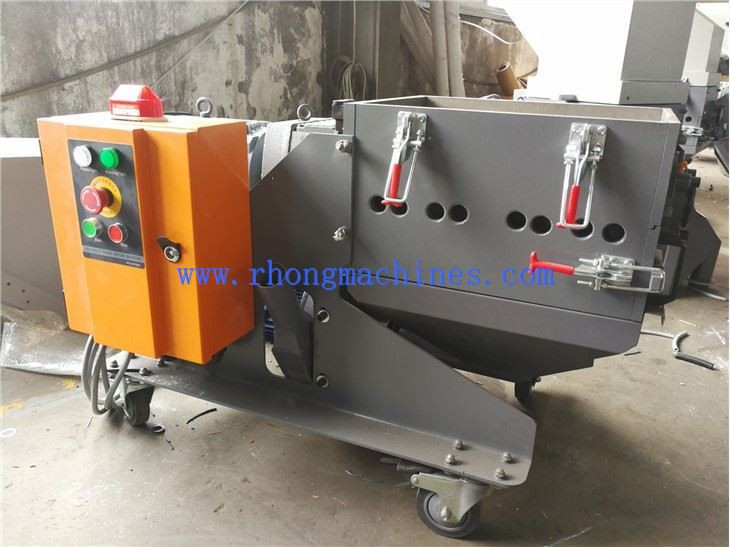
If you are interested in improving your granule quality or are in the market for a small granulator, we invite you to contact us for a detailed discussion. Our team of experts is ready to provide you with customized solutions based on your specific needs.
References
- Aulton, M. E., & Taylor, P. K. (2013). Aulton's Pharmaceutics: The Design and Manufacture of Medicines. Churchill Livingstone.
- Parikh, D. M., & Parikh, R. B. (2015). Pharmaceutical Granulation Technology. CRC Press.
- Upadhyay, R. C., & Mishra, B. (2016). Granulation Technology in Pharmaceutical Industry. Springer.