

How to select the right blade type for a vertical batch mixer?
Dec 18, 2025
Leave a message
Selecting the right blade type for a vertical batch mixer is crucial for achieving optimal mixing results in various industries. As a supplier of vertical batch mixers, I've seen firsthand how the choice of blades can make or break a mixing process. In this blog, I'll share some insights on how to pick the perfect blade type for your specific needs.
Understanding the Basics of Vertical Batch Mixers
Before diving into blade types, let's quickly go over what a vertical batch mixer is. It's a machine designed to mix different materials in a batch process. The materials are loaded into the mixer, mixed thoroughly, and then discharged. These mixers are commonly used in industries like plastics, food, pharmaceuticals, and chemicals.
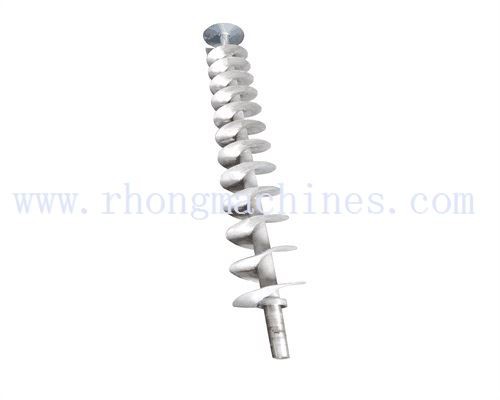

One of the key components of a vertical batch mixer is the blade. The blade's design and function play a significant role in how well the mixer performs. Different blade types are suitable for different materials and mixing requirements.
Types of Blades for Vertical Batch Mixers
Paddle Blades
Paddle blades are one of the most common blade types used in vertical batch mixers. They are simple in design, consisting of flat or slightly curved paddles attached to a central shaft. Paddle blades work by gently pushing and folding the materials, creating a laminar flow.
These blades are great for mixing materials that are free - flowing and don't require intense shearing. For example, in the food industry, they can be used to mix dry ingredients like flour, sugar, and spices. In the plastics industry, they are suitable for mixing plastic granules that are already in a relatively uniform state. You can check out our Plastic Granules Mixer which often uses paddle blades for efficient mixing.
Ribbon Blades
Ribbon blades are another popular choice. They consist of a continuous helical ribbon attached to a central shaft. The ribbon can be single - or double - helix, depending on the application. Ribbon blades work by moving the materials in both a radial and axial direction, providing a more thorough mixing action.
These blades are ideal for mixing materials with different particle sizes, densities, or viscosities. In the chemical industry, ribbon blades can be used to mix powders and liquids to create homogeneous mixtures. They are also commonly used in the production of fertilizers, where different nutrients need to be evenly distributed.
High - Shear Blades
High - shear blades are designed to break down agglomerates and disperse materials at a microscopic level. They typically have sharp edges and rotate at high speeds, creating a high - energy mixing environment.
High - shear blades are used when you need to achieve a very fine and uniform mixture. For example, in the pharmaceutical industry, they are used to mix active ingredients with excipients to ensure proper dosage and efficacy. In the paint industry, high - shear blades can be used to disperse pigments evenly in the paint base.
Factors to Consider When Selecting a Blade Type
Material Properties
The properties of the materials you are mixing are the most important factor in blade selection. If your materials are dry, free - flowing, and don't require much shearing, paddle blades might be the best choice. On the other hand, if your materials are sticky, have different densities, or need to be broken down, ribbon or high - shear blades could be more suitable.
For example, if you are mixing plastic pellets with color masterbatch, and the masterbatch has a tendency to clump, a ribbon blade or a high - shear blade might be needed to ensure even distribution of the color.
Mixing Time
The amount of time you have for mixing also affects blade selection. If you need a quick mix, high - shear blades can be very effective as they can break down and disperse materials rapidly. However, if you are dealing with delicate materials that can be damaged by high - energy mixing, paddle blades might be a better option, even though the mixing time might be longer.
Batch Size
The size of your batch is another crucial factor. Larger batches may require more powerful blades to ensure proper mixing. Ribbon blades are often a good choice for large - batch mixing as they can move a large volume of material effectively. For smaller batches, paddle blades might be sufficient and more cost - effective.
Desired Mixing Intensity
The level of mixing intensity you need depends on your end - product requirements. If you need a very homogeneous mixture with no visible differences in composition, a high - shear blade or a well - designed ribbon blade might be necessary. If a less intense mix is acceptable, paddle blades can do the job.
Our Product Offerings
At our company, we offer a range of vertical batch mixers with different blade types to meet various customer needs. Our Vertical Batch Color Mixer - Rhong Machinery is a great example. It can be equipped with different blades depending on whether you are mixing large or small batches of plastic materials with color additives.
We also have a Storage Color Mixer that uses a combination of blade types to ensure that the stored materials remain well - mixed and ready for use.
Conclusion
Selecting the right blade type for your vertical batch mixer is not a one - size - fits - all decision. It requires careful consideration of the material properties, mixing time, batch size, and desired mixing intensity. By understanding the different blade types and how they work, you can make an informed choice that will improve the efficiency and quality of your mixing process.
If you're interested in learning more about our vertical batch mixers or need help selecting the right blade type for your specific application, feel free to reach out to us. We're here to assist you in finding the perfect solution for your mixing needs.
References
- Mixing Equipment: Principles and Applications, by Edward L. Paul, Victor A. Atiemo - Obeng, and Suzanne M. Kresta
- Handbook of Industrial Mixing: Science and Practice, by Edward L. Paul, Victor A. Atiemo - Obeng, and Suzanne M. Kresta